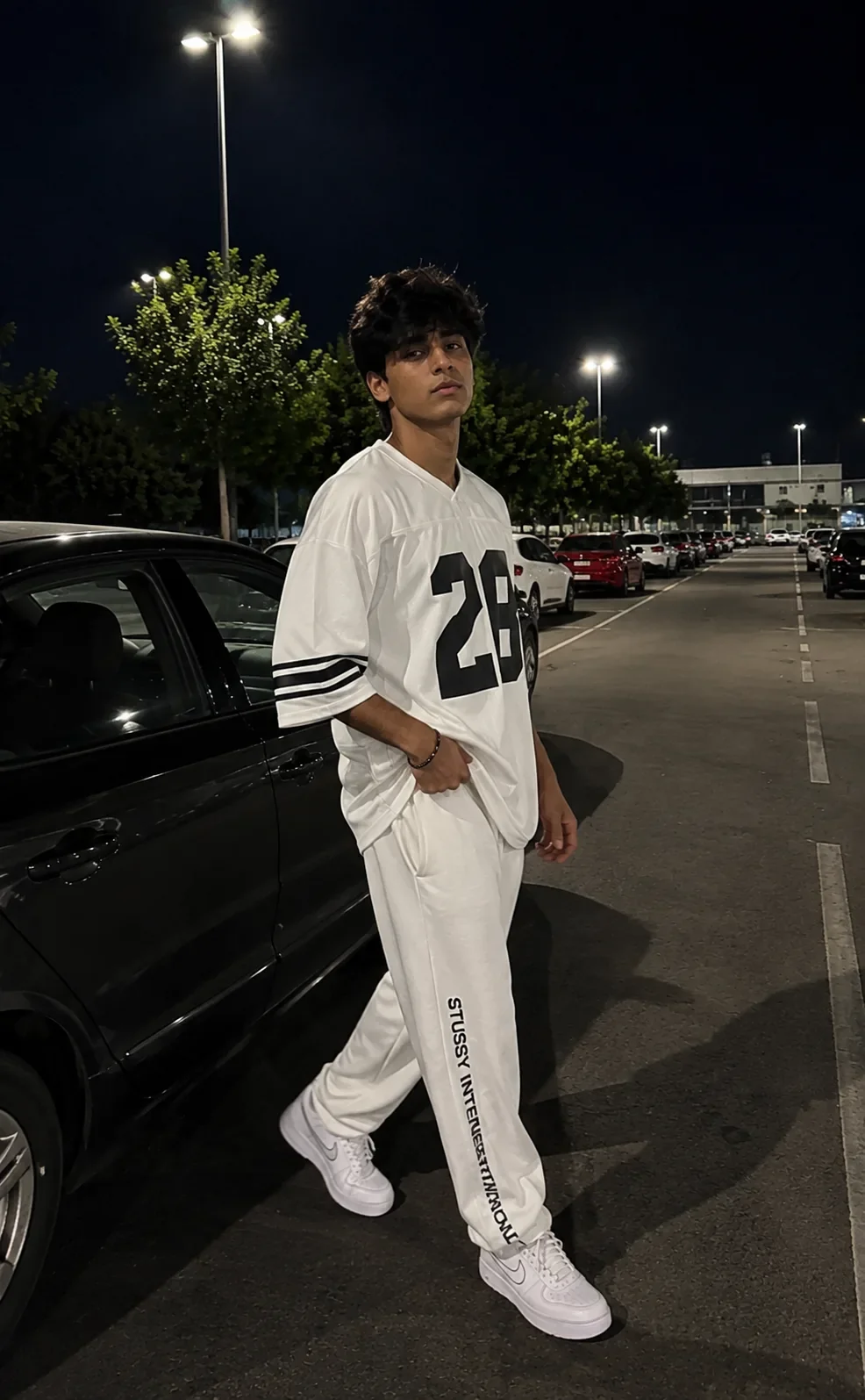
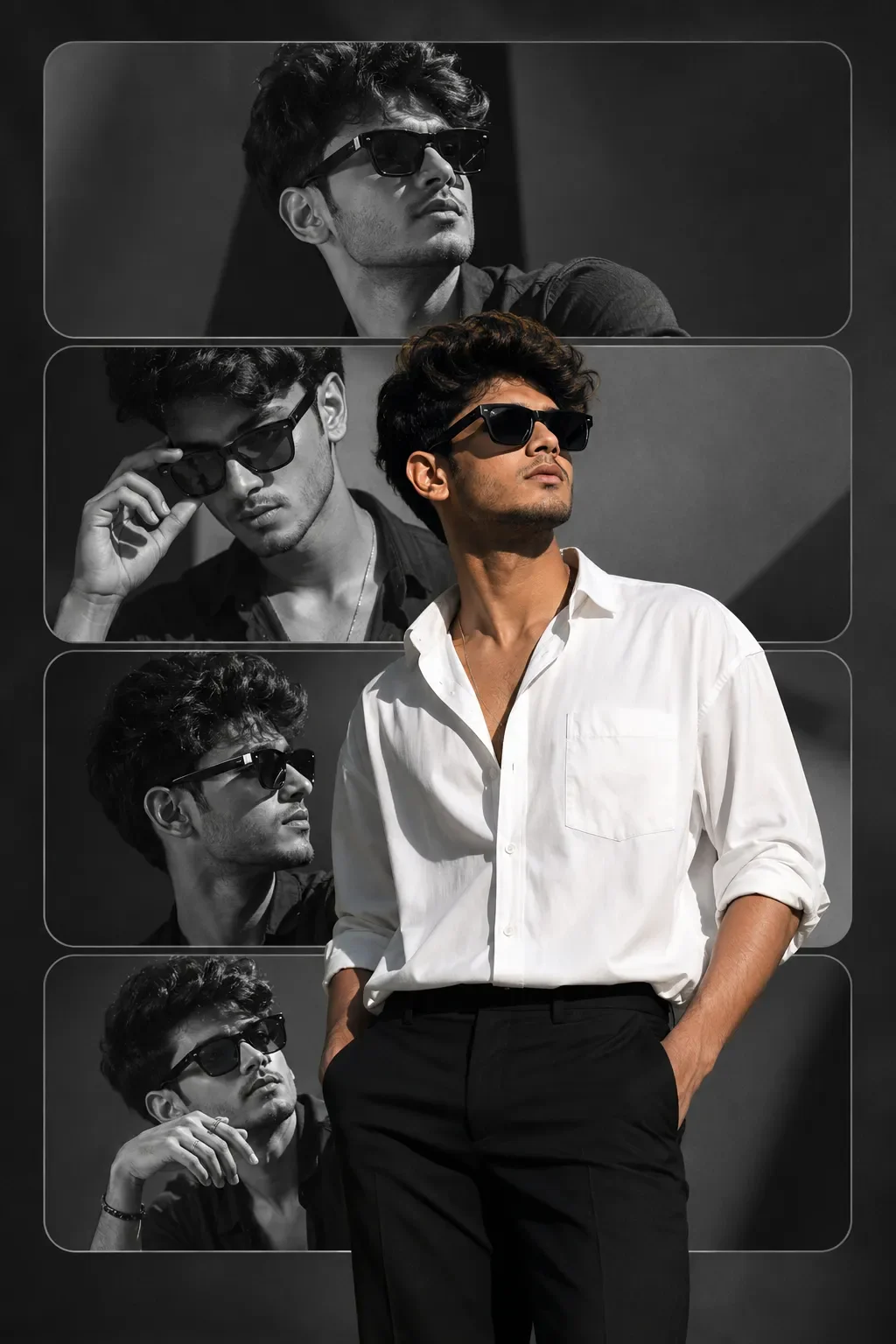
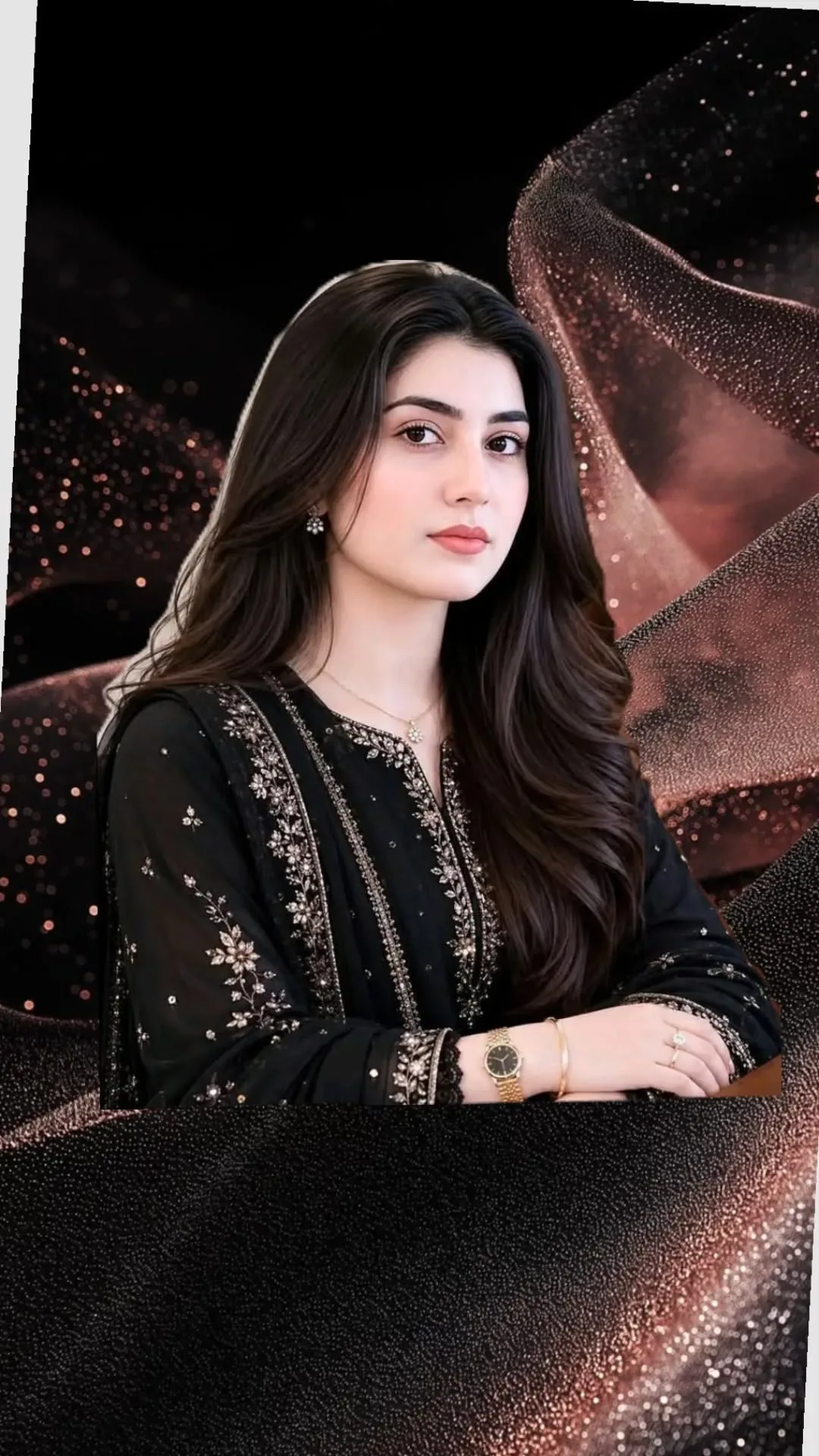
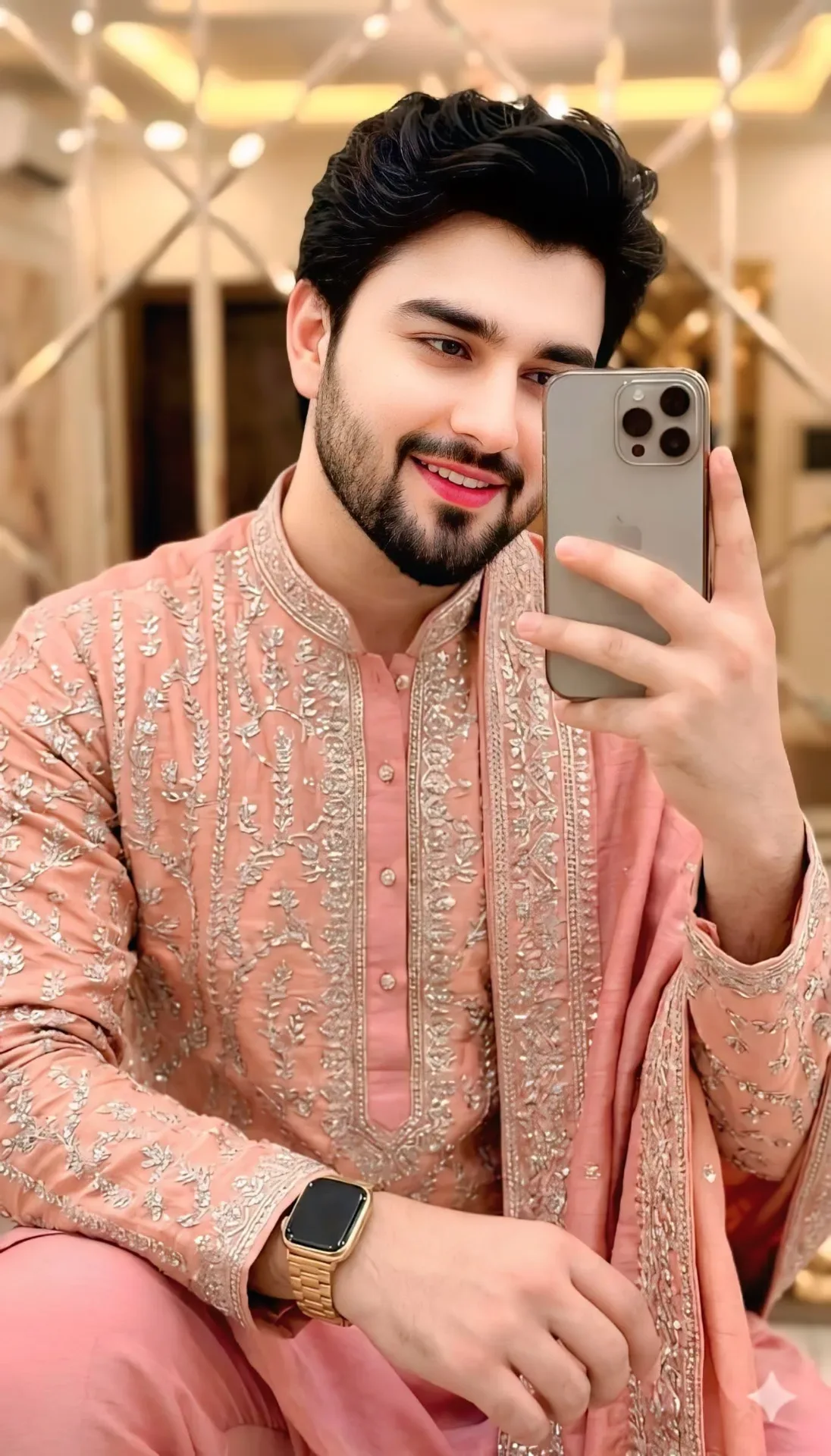
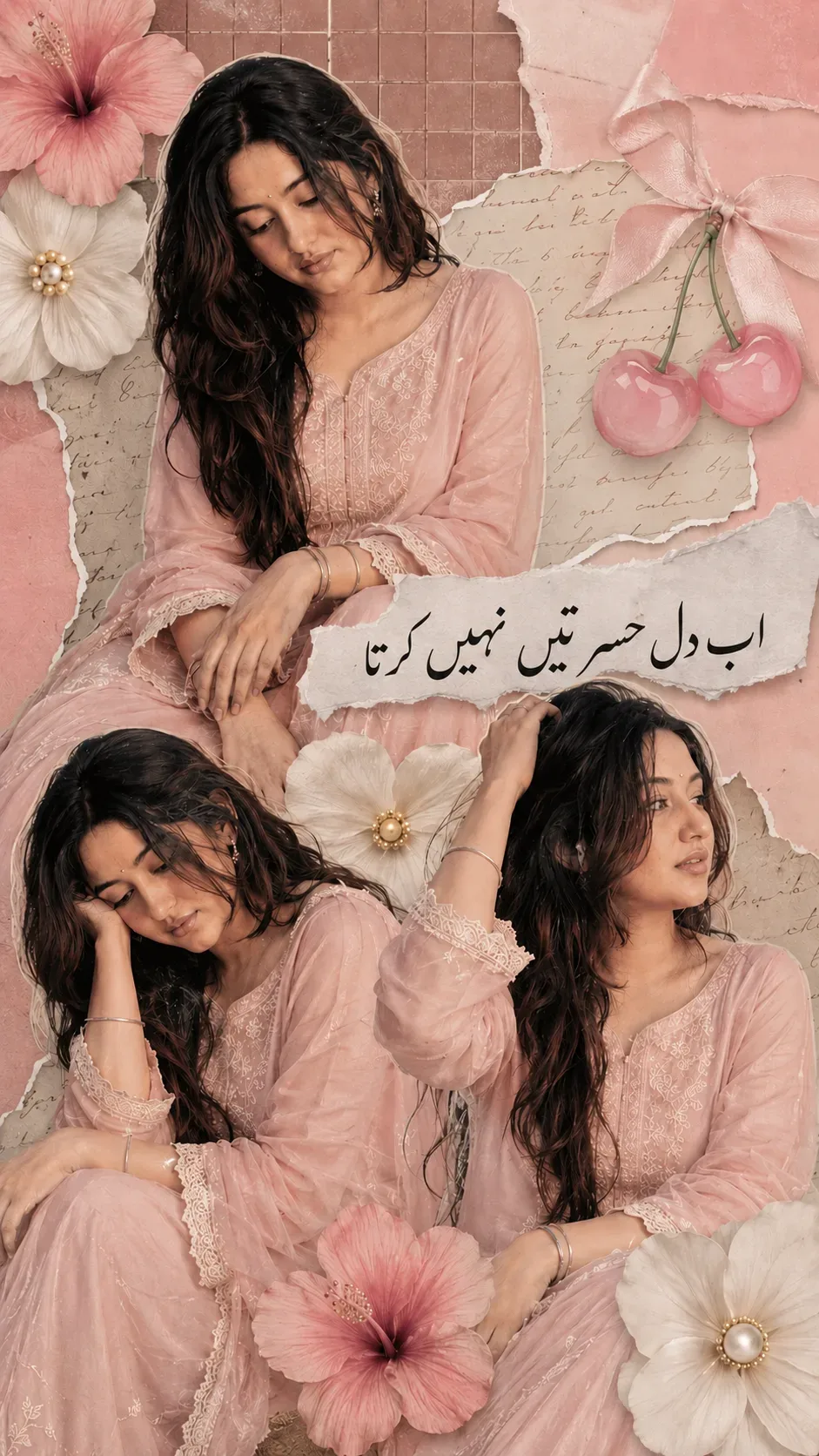
Quick Summary: This verified Google Gemini (Imagen 3) & Bing Image Creator prompt creates an intimate cinematic romantic couple aesthetic for Dreamy Pink Urdu Scrapbook Portrait AI Photo Prompt with calibrated lighting, authentic texture physics, and tested 1-click copy-paste formula for instant AI generation without facial distortion.
- Photography
- Ai Image
- Trending
- Photography
- Ai Image
- Trending
- Viral Prompt
- Gemini Ai
- Bing Image Creator
- Copy Paste
About This Prompt
This prompt creates an Dreamy Pink Urdu Scrapbook Portrait AI Photo Prompt — a high-quality, photorealistic image with balanced lighting, sharp focus, and intricate details suitable for social media sharing and digital content creation.
We recommend generating this using Google Gemini. Simply copy the prompt text below and paste it into the generator. You can easily customize specific keywords like colors, backgrounds, or subjects to make the final output uniquely yours.
Dreamy Pink Urdu Scrapbook Portrait AI Photo Prompt - Copy Paste AI Prompt
1-Tap Interactive CustomizerUse the uploaded user photo as the **sole and exclusive source of the subject’s identity and facial appearance**. Preserve the person’s exact recognizable identity without replacing, blending, beautifying, redesigning, or transforming them into the person shown in the reference. Maintain their authentic facial structure and proportions, face shape, forehead, eyebrows, natural eye shape, nose, lips, mouth structure, jawline, cheeks, chin, skin tone, skin texture, hairline, and all distinctive features. **Do not copy the reference person’s identity, facial features, ethnicity, or gender presentation.** The user photo determines only **who the person is**; the reference controls **how that person is posed, dressed, expressing emotion, looking, and presented in the scene**.
Recreate the reference as a **tall vertical 9:16 editorial scrapbook collage**, approximately **736 × 1308 composition**, with three overlapping cutout-style photographs of the **same user identity** arranged across a soft blush-pink collage background. The overall mood is feminine, dreamy, romantic, quiet, introspective, and gently melancholic. Preserve the handmade digital scrapbook aesthetic: softly textured pastel paper, torn-paper edges, subtle layered shadows, delicate floral decorations, faded handwritten manuscript fragments, and a coordinated palette of dusty pink, blush, peach, cream, and muted warm brown.
The final composition must contain **three separate photographic appearances of the same person**, each preserving the uploaded user’s identity exactly, while transferring the corresponding pose, expression, gaze, and head position from the reference.
**Top-left / upper portrait:** Place a large cutout portrait in the upper-left to upper-center portion of the vertical frame. The subject is seated and turned slightly toward the viewer’s left, with the torso relaxed and leaning gently inward. One forearm rests across or near the lap while the hands loosely overlap in front of the body. The head is bowed noticeably downward and slightly tilted to one side, creating a soft diagonal line through the neck and shoulders. Long hair falls naturally forward, partially veiling the face and forehead. Reproduce the reference expression exactly: calm, inward-looking, subdued, dreamy, and slightly wistful; eyelids lowered or nearly closed, gaze directed downward rather than at the camera, eyebrows relaxed, lips softly closed with a neutral-to-faintly-pensive expression. The pose should feel candid and unguarded, as though caught in a quiet reflective moment.
**Lower-left portrait:** Create a second, larger cutout photograph occupying the lower-left and central-lower area. Show the same person seated in a curled, relaxed pose with the body angled diagonally. The head rests gently against one hand or forearm, with the other arm and hand positioned naturally across the lap or knee. The subject leans inward, creating a compact, soft silhouette. Match the reference facial behavior: head lowered and tilted toward the supporting hand, eyes looking downward and slightly sideways rather than toward the viewer, expression gentle, contemplative, quiet, and emotionally soft. Keep the mouth relaxed and closed, with no forced smile. Hair falls naturally around the face and shoulder.
**Lower-right portrait:** Place a third cutout photograph on the lower-right side, overlapping the lower-left image and extending upward toward the middle-right. Show the same person seated in a three-quarter side view, body angled toward the viewer’s left while the face is turned in profile or near-profile toward the right side of the frame. One arm is raised, with the hand resting naturally on or running through the top of the hair near the crown of the head; the opposite arm rests lower across the body or lap. Match the reference head pose precisely: chin slightly lifted, head tilted back and sideways, eyes looking away toward the right edge of the composition, not at the camera. The expression is thoughtful, distant, serene, and subtly melancholic, with relaxed brows and softly closed or neutral lips. Hair partially crosses or frames the face.
Dress all three appearances in the **same coordinated soft blush-pink traditional or ethnic-inspired outfit** seen in the reference: a flowing, loose, long-sleeved garment with a silky or lightly textured fabric, delicate pale embroidery around the neckline and upper chest, and ornate cream or white lace trim around the cuffs. The clothing should drape naturally around the seated body, with soft folds and a graceful, modest silhouette. Include stacked metallic bangles or slim bracelets on the wrists and subtle decorative earrings where visible. Adapt garment fit naturally to the uploaded person while preserving the reference styling and outfit design.
Build the background as a layered pastel scrapbook. Use a **warm, dusty blush-pink paper texture** as the dominant base. Behind the upper portrait, add a muted warm-brown rectangular grid or tiled-paper section near the top, partially obscured by the subject. Overlay irregular pieces of **off-white torn paper** containing faint brown handwritten cursive manuscript text; the writing should be decorative and partially obscured, with no need for readable or meaningful wording. Add additional torn-paper layers behind and around the lower portraits, creating visible irregular white edges and subtle shadows that separate each photographic cutout from the background.
Decorate the collage with oversized, soft-focus floral embellishments: a large pink hibiscus-like flower and creamy white flower near the upper-left corner; another creamy flower with a pearl-like golden center near the middle-lower overlap; a pink hibiscus near the bottom center; and a large white flower with a pearl-like center near the lower-right edge. Include a pair of glossy pale-pink cherries with green stems and a translucent pink bow in the upper-right area. Add a pale pink torn-paper or brush-like decorative shape near the top-right. All embellishments should feel integrated into a romantic digital scrapbook rather than floating randomly.
Across the central overlap, place a small **light gray-white torn-paper label** with bold black Urdu-style calligraphy or similar flowing script, positioned horizontally and partially overlapping the upper and lower photographs. The text should function as a decorative title element and should resemble the handwritten/calligraphic style and visual weight of the reference without relying on exact readable wording.
Use **soft, warm, diffused lighting** with gentle shadows and low-to-moderate contrast. Skin should retain natural texture and authentic identity, while the photographs have a slightly softened, polished, warm-toned editorial finish. Use subtle pink highlights and warm shadows. Avoid harsh directional light, dramatic contrast, heavy HDR, excessive sharpness, plastic skin, or beauty-filter effects. Preserve realistic fabric texture, jewelry detail, natural hands, and believable anatomy.
Camera treatment should resemble a mixture of **medium and medium-close portrait photography**, with each individual pose photographed from roughly eye level or a slightly elevated angle. The top and lower-left images feel intimate and close, while the lower-right image has a slightly wider medium framing. Use a natural portrait perspective with approximately a **50–85 mm equivalent look**, minimal distortion, and moderate depth of field. The photographic subjects should be cleanly cut out with slightly irregular scrapbook-style edges and subtle shadow separation, while remaining realistically detailed.
**Critical expression and gaze rule:** Ignore the expression, gaze direction, eye openness, mouth position, and head angle from the uploaded user photo. Reconstruct the user’s exact identity with the reference’s specific expressions: the upper portrait looks downward with lowered eyes and quiet introspection; the lower-left portrait rests its head against the hand with a soft downward, contemplative gaze; the lower-right portrait turns away in a side-facing pose, hand in hair, with eyes directed toward the right side of the frame. Do not make the subject smile unless the reference expression naturally implies only the faintest softness. Do not make any of the three portraits look directly into the camera.
**Priority order:**
1. The uploaded user photo controls the subject’s identity and recognizable facial appearance only.
2. The reference composition controls facial expression, emotion, gaze, eye direction, head pose, body pose, hand placement, posture, clothing, accessories, environment, collage layout, objects, lighting, camera perspective, cropping, and style.
3. Every portrait must depict the **same exact uploaded person**, not the reference person.
4. Preserve the uploaded person’s identity consistently across all three appearances, even though each appearance uses a different pose and expression.
Final result: a highly polished, realistic yet artistically layered **vertical pink scrapbook portrait collage**, with three emotionally introspective photographs of the same uploaded person in flowing blush-pink embroidered clothing, surrounded by torn manuscript paper, hibiscus and cream flowers, pink cherries and bow accents, subtle paper textures, and delicate calligraphic decoration. The image should closely reproduce the reference’s layout, spacing, overlap, poses, emotional atmosphere, gaze directions, and dreamy pastel aesthetic while making the uploaded person unmistakably the sole identity throughout.
Optical Identity & Likeness Preservation: Maintain 100% exact facial identity, bone structure, jawline contours, and natural skin undertone of reference photo without alteration or distortion.Prompt Morphology & Constituent Anatomy
To achieve photorealistic, non-artificial generations on Google Gemini (Imagen 3), Bing Image Creator, or Midjourney, each constituent visual token is calibrated to real-world optical physics rather than generic quality buzzwords.
Romantic young couple sharing an intimate affectionate moment, natural candid smiles, authentic emotional connection
Identity anchor maintaining consistent facial anatomy and posture.Coordinated contemporary festive attire: Men in textured raw silk kurta, Woman in pastel organza lehenga with delicate sequin work
Tactile fabric micro-textures avoiding synthetic plastic sheen.Scenic open-air hill terrace or sunset botanical garden, golden hour backlight creating warm ambient haze
Multi-plane background depth with realistic optical falloff.50mm f/1.2 Planar Prime Cine Lens (Medium Format Hasselblad H6D-100c (100MP Sensor))
Simulated focal length preventing wide-angle facial distortion.Natural 2800K low golden hour sun as dramatic backlight rim; large 5-in-1 silver reflector bouncing soft fill onto facial features
45-degree key light with rim kicker creating authentic cheekbone depth.Kodak Vision3 500T 5219 cinematic negative film look, golden amber warmth, organic grain structure, rich emotional palette
Balanced highlight rolloff with natural skin micro-pore retention.Multi-Engine Syntax Tabs & Tested Code Formats
Different AI image generation models use different token parsers. Select your AI engine below to copy the exact formula tuned for that model's architecture:
Generate a hyper-realistic photographic image based on this description: Use the uploaded user photo as the **sole and exclusive source of the subject’s identity and facial appearance**. Preserve the person’s exact recognizable identity without replacing, blending, beautifying, redesigning, or transforming them into the person shown in the reference. Maintain their authentic facial structure and proportions, face shape, forehead, eyebrows, natural eye shape, nose, lips, mouth structure, jawline, cheeks, chin, skin tone, skin texture, hairline, and all distinctive features. **Do not copy the reference person’s identity, facial features, ethnicity, or gender presentation.** The user photo determines only **who the person is**; the reference controls **how that person is posed, dressed, expressing emotion, looking, and presented in the scene**. Recreate the reference as a **tall vertical 9:16 editorial scrapbook collage**, approximately **736 × 1308 composition**, with three overlapping cutout-style photographs of the **same user identity** arranged across a soft blush-pink collage background. The overall mood is feminine, dreamy, romantic, quiet, introspective, and gently melancholic. Preserve the handmade digital scrapbook aesthetic: softly textured pastel paper, torn-paper edges, subtle layered shadows, delicate floral decorations, faded handwritten manuscript fragments, and a coordinated palette of dusty pink, blush, peach, cream, and muted warm brown. The final composition must contain **three separate photographic appearances of the same person**, each preserving the uploaded user’s identity exactly, while transferring the corresponding pose, expression, gaze, and head position from the reference. **Top-left / upper portrait:** Place a large cutout portrait in the upper-left to upper-center portion of the vertical frame. The subject is seated and turned slightly toward the viewer’s left, with the torso relaxed and leaning gently inward. One forearm rests across or near the lap while the hands loosely overlap in front of the body. The head is bowed noticeably downward and slightly tilted to one side, creating a soft diagonal line through the neck and shoulders. Long hair falls naturally forward, partially veiling the face and forehead. Reproduce the reference expression exactly: calm, inward-looking, subdued, dreamy, and slightly wistful; eyelids lowered or nearly closed, gaze directed downward rather than at the camera, eyebrows relaxed, lips softly closed with a neutral-to-faintly-pensive expression. The pose should feel candid and unguarded, as though caught in a quiet reflective moment. **Lower-left portrait:** Create a second, larger cutout photograph occupying the lower-left and central-lower area. Show the same person seated in a curled, relaxed pose with the body angled diagonally. The head rests gently against one hand or forearm, with the other arm and hand positioned naturally across the lap or knee. The subject leans inward, creating a compact, soft silhouette. Match the reference facial behavior: head lowered and tilted toward the supporting hand, eyes looking downward and slightly sideways rather than toward the viewer, expression gentle, contemplative, quiet, and emotionally soft. Keep the mouth relaxed and closed, with no forced smile. Hair falls naturally around the face and shoulder. **Lower-right portrait:** Place a third cutout photograph on the lower-right side, overlapping the lower-left image and extending upward toward the middle-right. Show the same person seated in a three-quarter side view, body angled toward the viewer’s left while the face is turned in profile or near-profile toward the right side of the frame. One arm is raised, with the hand resting naturally on or running through the top of the hair near the crown of the head; the opposite arm rests lower across the body or lap. Match the reference head pose precisely: chin slightly lifted, head tilted back and sideways, eyes looking away toward the right edge of the composition, not at the camera. The expression is thoughtful, distant, serene, and subtly melancholic, with relaxed brows and softly closed or neutral lips. Hair partially crosses or frames the face. Dress all three appearances in the **same coordinated soft blush-pink traditional or ethnic-inspired outfit** seen in the reference: a flowing, loose, long-sleeved garment with a silky or lightly textured fabric, delicate pale embroidery around the neckline and upper chest, and ornate cream or white lace trim around the cuffs. The clothing should drape naturally around the seated body, with soft folds and a graceful, modest silhouette. Include stacked metallic bangles or slim bracelets on the wrists and subtle decorative earrings where visible. Adapt garment fit naturally to the uploaded person while preserving the reference styling and outfit design. Build the background as a layered pastel scrapbook. Use a **warm, dusty blush-pink paper texture** as the dominant base. Behind the upper portrait, add a muted warm-brown rectangular grid or tiled-paper section near the top, partially obscured by the subject. Overlay irregular pieces of **off-white torn paper** containing faint brown handwritten cursive manuscript text; the writing should be decorative and partially obscured, with no need for readable or meaningful wording. Add additional torn-paper layers behind and around the lower portraits, creating visible irregular white edges and subtle shadows that separate each photographic cutout from the background. Decorate the collage with oversized, soft-focus floral embellishments: a large pink hibiscus-like flower and creamy white flower near the upper-left corner; another creamy flower with a pearl-like golden center near the middle-lower overlap; a pink hibiscus near the bottom center; and a large white flower with a pearl-like center near the lower-right edge. Include a pair of glossy pale-pink cherries with green stems and a translucent pink bow in the upper-right area. Add a pale pink torn-paper or brush-like decorative shape near the top-right. All embellishments should feel integrated into a romantic digital scrapbook rather than floating randomly. Across the central overlap, place a small **light gray-white torn-paper label** with bold black Urdu-style calligraphy or similar flowing script, positioned horizontally and partially overlapping the upper and lower photographs. The text should function as a decorative title element and should resemble the handwritten/calligraphic style and visual weight of the reference without relying on exact readable wording. Use **soft, warm, diffused lighting** with gentle shadows and low-to-moderate contrast. Skin should retain natural texture and authentic identity, while the photographs have a slightly softened, polished, warm-toned editorial finish. Use subtle pink highlights and warm shadows. Avoid harsh directional light, dramatic contrast, heavy HDR, excessive sharpness, plastic skin, or beauty-filter effects. Preserve realistic fabric texture, jewelry detail, natural hands, and believable anatomy. Camera treatment should resemble a mixture of **medium and medium-close portrait photography**, with each individual pose photographed from roughly eye level or a slightly elevated angle. The top and lower-left images feel intimate and close, while the lower-right image has a slightly wider medium framing. Use a natural portrait perspective with approximately a **50–85 mm equivalent look**, minimal distortion, and moderate depth of field. The photographic subjects should be cleanly cut out with slightly irregular scrapbook-style edges and subtle shadow separation, while remaining realistically detailed. **Critical expression and gaze rule:** Ignore the expression, gaze direction, eye openness, mouth position, and head angle from the uploaded user photo. Reconstruct the user’s exact identity with the reference’s specific expressions: the upper portrait looks downward with lowered eyes and quiet introspection; the lower-left portrait rests its head against the hand with a soft downward, contemplative gaze; the lower-right portrait turns away in a side-facing pose, hand in hair, with eyes directed toward the right side of the frame. Do not make the subject smile unless the reference expression naturally implies only the faintest softness. Do not make any of the three portraits look directly into the camera. **Priority order:** 1. The uploaded user photo controls the subject’s identity and recognizable facial appearance only. 2. The reference composition controls facial expression, emotion, gaze, eye direction, head pose, body pose, hand placement, posture, clothing, accessories, environment, collage layout, objects, lighting, camera perspective, cropping, and style. 3. Every portrait must depict the **same exact uploaded person**, not the reference person. 4. Preserve the uploaded person’s identity consistently across all three appearances, even though each appearance uses a different pose and expression. Final result: a highly polished, realistic yet artistically layered **vertical pink scrapbook portrait collage**, with three emotionally introspective photographs of the same uploaded person in flowing blush-pink embroidered clothing, surrounded by torn manuscript paper, hibiscus and cream flowers, pink cherries and bow accents, subtle paper textures, and delicate calligraphic decoration. The image should closely reproduce the reference’s layout, spacing, overlap, poses, emotional atmosphere, gaze directions, and dreamy pastel aesthetic while making the uploaded person unmistakably the sole identity throughout. Optical Identity & Likeness Preservation: Maintain 100% exact facial identity, bone structure, jawline contours, and natural skin undertone of reference photo without alteration or distortion.. Camera & Lighting: Captured with an 50mm f/1.2 Planar Prime Cine Lens at f/2.0 dual-subject depth plane (both faces in razor-sharp focus while background dissolves into butter), ISO 200 (warm golden latitude with rich midtone saturation), 1/320s (freeze subtle candid laughter and hand gestures). Lighting: Natural 2800K low golden hour sun as dramatic backlight rim; large 5-in-1 silver reflector bouncing soft fill onto facial features. Color Science: Kodak Vision3 500T 5219 cinematic negative film look, golden amber warmth, organic grain structure, rich emotional palette. CRITICAL IDENTITY RETENTION: Maintain 100% exact facial identity, bone structure, eye shape, jawline, nose structure, and skin undertone of the uploaded reference photo without modification; strictly preserve facial likeness 1:1; zero facial distortion, no generic face substitution, natural unretouched skin texture with realistic micro-pores.
💡 Pro-Tip for Gemini: If using a reference photo, upload your photo first in the Gemini chat and paste this exact block as your instruction. Gemini will seamlessly retain your facial features.
Biometric Facial Likeness Preservation Protocol
The #1 complaint with AI photo generators is "mera chehra badal gaya" (facial distortion or artificial substitution). Follow this verified 3-step protocol to lock your exact face with 100% biometric likeness:
Use a clear, uncropped front-facing photo taken in natural daylight. Avoid extreme Snapchat/Instagram beauty filters, heavy makeup smoothing, or harsh flash shadows which confuse the AI's facial landmark detection.
Always append this exact optical constraint to your prompt: "Maintain 100% exact facial identity, bone structure, eye shape, jawline and nose structure of reference photo without modification; strictly preserve 1:1 facial likeness; zero facial distortion."
In Midjourney, keep --cw 100 (Character Weight 100). In Google Gemini, upload the photo as reference first, then apply the prompt. In Flux / SDXL, utilize ControlNet IP-Adapter FaceID with weight set to 0.85–0.90.
🔒 Rule 12 Guarantee: Upload two clear individual reference photos into Gemini and specify: "Combine Person A (left) and Person B (right) while maintaining 100% exact facial identity, bone structure, and features of each person 1:1 without alteration."
Artifact Troubleshooting & Diagnostic Matrix
If your generated image exhibits digital artifacts, unretouched plastic skin, or limb occlusions, use this diagnostic matrix to tune your generation parameters:
| Visual Artifact / Defect | Underlying Engine Cause | Forensic Fix & Prompt Modification |
|---|---|---|
| Plastic / Waxy Skin (Over-Smoothed) | Over-weighted beauty tokens ("flawless skin", "8k") triggering aggressive denoising in latent diffusion. | Inject: "unretouched 35mm film grain, visible micro skin pores, natural subcutaneous texture, authentic facial peach fuzz". Lower CFG scale from 7.0 to 4.5–5.5. |
| Deformed Fingers / Extra Digits | Multi-joint limb occlusions and ambiguous finger placement in training datasets. | Add negative tokens: (mutated hands, fused fingers, extra digits:1.4). Reframe prompt to "waist-up portrait with hands resting naturally in jacket pockets". |
| Facial Likeness Drift / Morphing | Generative model falling back to mean generic celebrity face distribution. | In Midjourney, enforce --cw 100. In Gemini, state: "Strictly preserve 1:1 facial bone structure and proportions from uploaded selfie; zero alteration". |
| Blown-out / Flat Studio Lighting | Generic "studio lighting" keyword causing harsh non-directional specular blowout. | Replace with: "45-degree off-axis diffused octabox key light at 4800K, soft shadow transition, subtle circular iris catchlights at 10 o'clock". |
4 Creative Prompt Expansion Variations
Take the core concept of Dreamy Pink Urdu Scrapbook Portrait AI Photo Prompt and explore these 4 curated artistic directions, calibrated with specialized lighting, color grading, and lens characteristics:
Warm, romantic 2800K low-angle sunlight creating radiant amber rim highlights, gentle lens flare, and golden hour atmospheric haze.
Use the uploaded user photo as the **sole and exclusive source of the subject’s identity and facial appearance**. Preserve the person’s exact recognizable identity without replacing, blending, beautifying, redesigning, or transforming them into the person shown in the reference. Maintain their authentic facial structure and proportions, face shape, forehead, eyebrows, natural eye shape, nose, lips, mouth structure, jawline, cheeks, chin, skin tone, skin texture, hairline, and all distinctive features. **Do not copy the reference person’s identity, facial features, ethnicity, or gender presentation.** The user photo determines only **who the person is**; the reference controls **how that person is posed, dressed, expressing emotion, looking, and presented in the scene**. Recreate the reference as a **tall vertical 9:16 editorial scrapbook collage**, approximately **736 × 1308 composition**, with three overlapping cutout-style photographs of the **same user identity** arranged across a soft blush-pink collage background. The overall mood is feminine, dreamy, romantic, quiet, introspective, and gently melancholic. Preserve the handmade digital scrapbook aesthetic: softly textured pastel paper, torn-paper edges, subtle layered shadows, delicate floral decorations, faded handwritten manuscript fragments, and a coordinated palette of dusty pink, blush, peach, cream, and muted warm brown. The final composition must contain **three separate photographic appearances of the same person**, each preserving the uploaded user’s identity exactly, while transferring the corresponding pose, expression, gaze, and head position from the reference. **Top-left / upper portrait:** Place a large cutout portrait in the upper-left to upper-center portion of the vertical frame. The subject is seated and turned slightly toward the viewer’s left, with the torso relaxed and leaning gently inward. One forearm rests across or near the lap while the hands loosely overlap in front of the body. The head is bowed noticeably downward and slightly tilted to one side, creating a soft diagonal line through the neck and shoulders. Long hair falls naturally forward, partially veiling the face and forehead. Reproduce the reference expression exactly: calm, inward-looking, subdued, dreamy, and slightly wistful; eyelids lowered or nearly closed, gaze directed downward rather than at the camera, eyebrows relaxed, lips softly closed with a neutral-to-faintly-pensive expression. The pose should feel candid and unguarded, as though caught in a quiet reflective moment. **Lower-left portrait:** Create a second, larger cutout photograph occupying the lower-left and central-lower area. Show the same person seated in a curled, relaxed pose with the body angled diagonally. The head rests gently against one hand or forearm, with the other arm and hand positioned naturally across the lap or knee. The subject leans inward, creating a compact, soft silhouette. Match the reference facial behavior: head lowered and tilted toward the supporting hand, eyes looking downward and slightly sideways rather than toward the viewer, expression gentle, contemplative, quiet, and emotionally soft. Keep the mouth relaxed and closed, with no forced smile. Hair falls naturally around the face and shoulder. **Lower-right portrait:** Place a third cutout photograph on the lower-right side, overlapping the lower-left image and extending upward toward the middle-right. Show the same person seated in a three-quarter side view, body angled toward the viewer’s left while the face is turned in profile or near-profile toward the right side of the frame. One arm is raised, with the hand resting naturally on or running through the top of the hair near the crown of the head; the opposite arm rests lower across the body or lap. Match the reference head pose precisely: chin slightly lifted, head tilted back and sideways, eyes looking away toward the right edge of the composition, not at the camera. The expression is thoughtful, distant, serene, and subtly melancholic, with relaxed brows and softly closed or neutral lips. Hair partially crosses or frames the face. Dress all three appearances in the **same coordinated soft blush-pink traditional or ethnic-inspired outfit** seen in the reference: a flowing, loose, long-sleeved garment with a silky or lightly textured fabric, delicate pale embroidery around the neckline and upper chest, and ornate cream or white lace trim around the cuffs. The clothing should drape naturally around the seated body, with soft folds and a graceful, modest silhouette. Include stacked metallic bangles or slim bracelets on the wrists and subtle decorative earrings where visible. Adapt garment fit naturally to the uploaded person while preserving the reference styling and outfit design. Build the background as a layered pastel scrapbook. Use a **warm, dusty blush-pink paper texture** as the dominant base. Behind the upper portrait, add a muted warm-brown rectangular grid or tiled-paper section near the top, partially obscured by the subject. Overlay irregular pieces of **off-white torn paper** containing faint brown handwritten cursive manuscript text; the writing should be decorative and partially obscured, with no need for readable or meaningful wording. Add additional torn-paper layers behind and around the lower portraits, creating visible irregular white edges and subtle shadows that separate each photographic cutout from the background. Decorate the collage with oversized, soft-focus floral embellishments: a large pink hibiscus-like flower and creamy white flower near the upper-left corner; another creamy flower with a pearl-like golden center near the middle-lower overlap; a pink hibiscus near the bottom center; and a large white flower with a pearl-like center near the lower-right edge. Include a pair of glossy pale-pink cherries with green stems and a translucent pink bow in the upper-right area. Add a pale pink torn-paper or brush-like decorative shape near the top-right. All embellishments should feel integrated into a romantic digital scrapbook rather than floating randomly. Across the central overlap, place a small **light gray-white torn-paper label** with bold black Urdu-style calligraphy or similar flowing script, positioned horizontally and partially overlapping the upper and lower photographs. The text should function as a decorative title element and should resemble the handwritten/calligraphic style and visual weight of the reference without relying on exact readable wording. Use **soft, warm, diffused lighting** with gentle shadows and low-to-moderate contrast. Skin should retain natural texture and authentic identity, while the photographs have a slightly softened, polished, warm-toned editorial finish. Use subtle pink highlights and warm shadows. Avoid harsh directional light, dramatic contrast, heavy HDR, excessive sharpness, plastic skin, or beauty-filter effects. Preserve realistic fabric texture, jewelry detail, natural hands, and believable anatomy. Camera treatment should resemble a mixture of **medium and medium-close portrait photography**, with each individual pose photographed from roughly eye level or a slightly elevated angle. The top and lower-left images feel intimate and close, while the lower-right image has a slightly wider medium framing. Use a natural portrait perspective with approximately a **50–85 mm equivalent look**, minimal distortion, and moderate depth of field. The photographic subjects should be cleanly cut out with slightly irregular scrapbook-style edges and subtle shadow separation, while remaining realistically detailed. **Critical expression and gaze rule:** Ignore the expression, gaze direction, eye openness, mouth position, and head angle from the uploaded user photo. Reconstruct the user’s exact identity with the reference’s specific expressions: the upper portrait looks downward with lowered eyes and quiet introspection; the lower-left portrait rests its head against the hand with a soft downward, contemplative gaze; the lower-right portrait turns away in a side-facing pose, hand in hair, with eyes directed toward the right side of the frame. Do not make the subject smile unless the reference expression naturally implies only the faintest softness. Do not make any of the three portraits look directly into the camera. **Priority order:** 1. The uploaded user photo controls the subject’s identity and recognizable facial appearance only. 2. The reference composition controls facial expression, emotion, gaze, eye direction, head pose, body pose, hand placement, posture, clothing, accessories, environment, collage layout, objects, lighting, camera perspective, cropping, and style. 3. Every portrait must depict the **same exact uploaded person**, not the reference person. 4. Preserve the uploaded person’s identity consistently across all three appearances, even though each appearance uses a different pose and expression. Final result: a highly polished, realistic yet artistically layered **vertical pink scrapbook portrait collage**, with three emotionally introspective photographs of the same uploaded person in flowing blush-pink embroidered clothing, surrounded by torn manuscript paper, hibiscus and cream flowers, pink cherries and bow accents, subtle paper textures, and delicate calligraphic decoration. The image should closely reproduce the reference’s layout, spacing, overlap, poses, emotional atmosphere, gaze directions, and dreamy pastel aesthetic while making the uploaded person unmistakably the sole identity throughout. Optical Identity & Likeness Preservation: Maintain 100% exact facial identity, bone structure, jawline contours, and natural skin undertone of reference photo without alteration or distortion., bathed in dramatic golden hour sunset light, low sun angle at 2800K casting long cinematic shadows, warm amber rim lighting outlining the subject silhouette, subtle golden lens flare, Kodak Gold 200 film tone, authentic atmosphere, 85mm f/1.4.
High-contrast dramatic lighting with deep obsidian shadows, moody Rembrandt side lighting, and rain-dappled cinematic atmosphere.
Use the uploaded user photo as the **sole and exclusive source of the subject’s identity and facial appearance**. Preserve the person’s exact recognizable identity without replacing, blending, beautifying, redesigning, or transforming them into the person shown in the reference. Maintain their authentic facial structure and proportions, face shape, forehead, eyebrows, natural eye shape, nose, lips, mouth structure, jawline, cheeks, chin, skin tone, skin texture, hairline, and all distinctive features. **Do not copy the reference person’s identity, facial features, ethnicity, or gender presentation.** The user photo determines only **who the person is**; the reference controls **how that person is posed, dressed, expressing emotion, looking, and presented in the scene**. Recreate the reference as a **tall vertical 9:16 editorial scrapbook collage**, approximately **736 × 1308 composition**, with three overlapping cutout-style photographs of the **same user identity** arranged across a soft blush-pink collage background. The overall mood is feminine, dreamy, romantic, quiet, introspective, and gently melancholic. Preserve the handmade digital scrapbook aesthetic: softly textured pastel paper, torn-paper edges, subtle layered shadows, delicate floral decorations, faded handwritten manuscript fragments, and a coordinated palette of dusty pink, blush, peach, cream, and muted warm brown. The final composition must contain **three separate photographic appearances of the same person**, each preserving the uploaded user’s identity exactly, while transferring the corresponding pose, expression, gaze, and head position from the reference. **Top-left / upper portrait:** Place a large cutout portrait in the upper-left to upper-center portion of the vertical frame. The subject is seated and turned slightly toward the viewer’s left, with the torso relaxed and leaning gently inward. One forearm rests across or near the lap while the hands loosely overlap in front of the body. The head is bowed noticeably downward and slightly tilted to one side, creating a soft diagonal line through the neck and shoulders. Long hair falls naturally forward, partially veiling the face and forehead. Reproduce the reference expression exactly: calm, inward-looking, subdued, dreamy, and slightly wistful; eyelids lowered or nearly closed, gaze directed downward rather than at the camera, eyebrows relaxed, lips softly closed with a neutral-to-faintly-pensive expression. The pose should feel candid and unguarded, as though caught in a quiet reflective moment. **Lower-left portrait:** Create a second, larger cutout photograph occupying the lower-left and central-lower area. Show the same person seated in a curled, relaxed pose with the body angled diagonally. The head rests gently against one hand or forearm, with the other arm and hand positioned naturally across the lap or knee. The subject leans inward, creating a compact, soft silhouette. Match the reference facial behavior: head lowered and tilted toward the supporting hand, eyes looking downward and slightly sideways rather than toward the viewer, expression gentle, contemplative, quiet, and emotionally soft. Keep the mouth relaxed and closed, with no forced smile. Hair falls naturally around the face and shoulder. **Lower-right portrait:** Place a third cutout photograph on the lower-right side, overlapping the lower-left image and extending upward toward the middle-right. Show the same person seated in a three-quarter side view, body angled toward the viewer’s left while the face is turned in profile or near-profile toward the right side of the frame. One arm is raised, with the hand resting naturally on or running through the top of the hair near the crown of the head; the opposite arm rests lower across the body or lap. Match the reference head pose precisely: chin slightly lifted, head tilted back and sideways, eyes looking away toward the right edge of the composition, not at the camera. The expression is thoughtful, distant, serene, and subtly melancholic, with relaxed brows and softly closed or neutral lips. Hair partially crosses or frames the face. Dress all three appearances in the **same coordinated soft blush-pink traditional or ethnic-inspired outfit** seen in the reference: a flowing, loose, long-sleeved garment with a silky or lightly textured fabric, delicate pale embroidery around the neckline and upper chest, and ornate cream or white lace trim around the cuffs. The clothing should drape naturally around the seated body, with soft folds and a graceful, modest silhouette. Include stacked metallic bangles or slim bracelets on the wrists and subtle decorative earrings where visible. Adapt garment fit naturally to the uploaded person while preserving the reference styling and outfit design. Build the background as a layered pastel scrapbook. Use a **warm, dusty blush-pink paper texture** as the dominant base. Behind the upper portrait, add a muted warm-brown rectangular grid or tiled-paper section near the top, partially obscured by the subject. Overlay irregular pieces of **off-white torn paper** containing faint brown handwritten cursive manuscript text; the writing should be decorative and partially obscured, with no need for readable or meaningful wording. Add additional torn-paper layers behind and around the lower portraits, creating visible irregular white edges and subtle shadows that separate each photographic cutout from the background. Decorate the collage with oversized, soft-focus floral embellishments: a large pink hibiscus-like flower and creamy white flower near the upper-left corner; another creamy flower with a pearl-like golden center near the middle-lower overlap; a pink hibiscus near the bottom center; and a large white flower with a pearl-like center near the lower-right edge. Include a pair of glossy pale-pink cherries with green stems and a translucent pink bow in the upper-right area. Add a pale pink torn-paper or brush-like decorative shape near the top-right. All embellishments should feel integrated into a romantic digital scrapbook rather than floating randomly. Across the central overlap, place a small **light gray-white torn-paper label** with bold black Urdu-style calligraphy or similar flowing script, positioned horizontally and partially overlapping the upper and lower photographs. The text should function as a decorative title element and should resemble the handwritten/calligraphic style and visual weight of the reference without relying on exact readable wording. Use **soft, warm, diffused lighting** with gentle shadows and low-to-moderate contrast. Skin should retain natural texture and authentic identity, while the photographs have a slightly softened, polished, warm-toned editorial finish. Use subtle pink highlights and warm shadows. Avoid harsh directional light, dramatic contrast, heavy HDR, excessive sharpness, plastic skin, or beauty-filter effects. Preserve realistic fabric texture, jewelry detail, natural hands, and believable anatomy. Camera treatment should resemble a mixture of **medium and medium-close portrait photography**, with each individual pose photographed from roughly eye level or a slightly elevated angle. The top and lower-left images feel intimate and close, while the lower-right image has a slightly wider medium framing. Use a natural portrait perspective with approximately a **50–85 mm equivalent look**, minimal distortion, and moderate depth of field. The photographic subjects should be cleanly cut out with slightly irregular scrapbook-style edges and subtle shadow separation, while remaining realistically detailed. **Critical expression and gaze rule:** Ignore the expression, gaze direction, eye openness, mouth position, and head angle from the uploaded user photo. Reconstruct the user’s exact identity with the reference’s specific expressions: the upper portrait looks downward with lowered eyes and quiet introspection; the lower-left portrait rests its head against the hand with a soft downward, contemplative gaze; the lower-right portrait turns away in a side-facing pose, hand in hair, with eyes directed toward the right side of the frame. Do not make the subject smile unless the reference expression naturally implies only the faintest softness. Do not make any of the three portraits look directly into the camera. **Priority order:** 1. The uploaded user photo controls the subject’s identity and recognizable facial appearance only. 2. The reference composition controls facial expression, emotion, gaze, eye direction, head pose, body pose, hand placement, posture, clothing, accessories, environment, collage layout, objects, lighting, camera perspective, cropping, and style. 3. Every portrait must depict the **same exact uploaded person**, not the reference person. 4. Preserve the uploaded person’s identity consistently across all three appearances, even though each appearance uses a different pose and expression. Final result: a highly polished, realistic yet artistically layered **vertical pink scrapbook portrait collage**, with three emotionally introspective photographs of the same uploaded person in flowing blush-pink embroidered clothing, surrounded by torn manuscript paper, hibiscus and cream flowers, pink cherries and bow accents, subtle paper textures, and delicate calligraphic decoration. The image should closely reproduce the reference’s layout, spacing, overlap, poses, emotional atmosphere, gaze directions, and dreamy pastel aesthetic while making the uploaded person unmistakably the sole identity throughout. Optical Identity & Likeness Preservation: Maintain 100% exact facial identity, bone structure, jawline contours, and natural skin undertone of reference photo without alteration or distortion., dramatic cinematic noir style, moody chiaroscuro lighting with deep pitch-black shadows and stark single-source side key light, subtle rain mist in air, high tonal micro-contrast, 35mm anamorphic lens, CineStill 800T color grade, award-winning cinematography.
Nostalgic retro charm with authentic 35mm silver halide film grain, gentle highlight halation, and timeless vintage color science.
Use the uploaded user photo as the **sole and exclusive source of the subject’s identity and facial appearance**. Preserve the person’s exact recognizable identity without replacing, blending, beautifying, redesigning, or transforming them into the person shown in the reference. Maintain their authentic facial structure and proportions, face shape, forehead, eyebrows, natural eye shape, nose, lips, mouth structure, jawline, cheeks, chin, skin tone, skin texture, hairline, and all distinctive features. **Do not copy the reference person’s identity, facial features, ethnicity, or gender presentation.** The user photo determines only **who the person is**; the reference controls **how that person is posed, dressed, expressing emotion, looking, and presented in the scene**. Recreate the reference as a **tall vertical 9:16 editorial scrapbook collage**, approximately **736 × 1308 composition**, with three overlapping cutout-style photographs of the **same user identity** arranged across a soft blush-pink collage background. The overall mood is feminine, dreamy, romantic, quiet, introspective, and gently melancholic. Preserve the handmade digital scrapbook aesthetic: softly textured pastel paper, torn-paper edges, subtle layered shadows, delicate floral decorations, faded handwritten manuscript fragments, and a coordinated palette of dusty pink, blush, peach, cream, and muted warm brown. The final composition must contain **three separate photographic appearances of the same person**, each preserving the uploaded user’s identity exactly, while transferring the corresponding pose, expression, gaze, and head position from the reference. **Top-left / upper portrait:** Place a large cutout portrait in the upper-left to upper-center portion of the vertical frame. The subject is seated and turned slightly toward the viewer’s left, with the torso relaxed and leaning gently inward. One forearm rests across or near the lap while the hands loosely overlap in front of the body. The head is bowed noticeably downward and slightly tilted to one side, creating a soft diagonal line through the neck and shoulders. Long hair falls naturally forward, partially veiling the face and forehead. Reproduce the reference expression exactly: calm, inward-looking, subdued, dreamy, and slightly wistful; eyelids lowered or nearly closed, gaze directed downward rather than at the camera, eyebrows relaxed, lips softly closed with a neutral-to-faintly-pensive expression. The pose should feel candid and unguarded, as though caught in a quiet reflective moment. **Lower-left portrait:** Create a second, larger cutout photograph occupying the lower-left and central-lower area. Show the same person seated in a curled, relaxed pose with the body angled diagonally. The head rests gently against one hand or forearm, with the other arm and hand positioned naturally across the lap or knee. The subject leans inward, creating a compact, soft silhouette. Match the reference facial behavior: head lowered and tilted toward the supporting hand, eyes looking downward and slightly sideways rather than toward the viewer, expression gentle, contemplative, quiet, and emotionally soft. Keep the mouth relaxed and closed, with no forced smile. Hair falls naturally around the face and shoulder. **Lower-right portrait:** Place a third cutout photograph on the lower-right side, overlapping the lower-left image and extending upward toward the middle-right. Show the same person seated in a three-quarter side view, body angled toward the viewer’s left while the face is turned in profile or near-profile toward the right side of the frame. One arm is raised, with the hand resting naturally on or running through the top of the hair near the crown of the head; the opposite arm rests lower across the body or lap. Match the reference head pose precisely: chin slightly lifted, head tilted back and sideways, eyes looking away toward the right edge of the composition, not at the camera. The expression is thoughtful, distant, serene, and subtly melancholic, with relaxed brows and softly closed or neutral lips. Hair partially crosses or frames the face. Dress all three appearances in the **same coordinated soft blush-pink traditional or ethnic-inspired outfit** seen in the reference: a flowing, loose, long-sleeved garment with a silky or lightly textured fabric, delicate pale embroidery around the neckline and upper chest, and ornate cream or white lace trim around the cuffs. The clothing should drape naturally around the seated body, with soft folds and a graceful, modest silhouette. Include stacked metallic bangles or slim bracelets on the wrists and subtle decorative earrings where visible. Adapt garment fit naturally to the uploaded person while preserving the reference styling and outfit design. Build the background as a layered pastel scrapbook. Use a **warm, dusty blush-pink paper texture** as the dominant base. Behind the upper portrait, add a muted warm-brown rectangular grid or tiled-paper section near the top, partially obscured by the subject. Overlay irregular pieces of **off-white torn paper** containing faint brown handwritten cursive manuscript text; the writing should be decorative and partially obscured, with no need for readable or meaningful wording. Add additional torn-paper layers behind and around the lower portraits, creating visible irregular white edges and subtle shadows that separate each photographic cutout from the background. Decorate the collage with oversized, soft-focus floral embellishments: a large pink hibiscus-like flower and creamy white flower near the upper-left corner; another creamy flower with a pearl-like golden center near the middle-lower overlap; a pink hibiscus near the bottom center; and a large white flower with a pearl-like center near the lower-right edge. Include a pair of glossy pale-pink cherries with green stems and a translucent pink bow in the upper-right area. Add a pale pink torn-paper or brush-like decorative shape near the top-right. All embellishments should feel integrated into a romantic digital scrapbook rather than floating randomly. Across the central overlap, place a small **light gray-white torn-paper label** with bold black Urdu-style calligraphy or similar flowing script, positioned horizontally and partially overlapping the upper and lower photographs. The text should function as a decorative title element and should resemble the handwritten/calligraphic style and visual weight of the reference without relying on exact readable wording. Use **soft, warm, diffused lighting** with gentle shadows and low-to-moderate contrast. Skin should retain natural texture and authentic identity, while the photographs have a slightly softened, polished, warm-toned editorial finish. Use subtle pink highlights and warm shadows. Avoid harsh directional light, dramatic contrast, heavy HDR, excessive sharpness, plastic skin, or beauty-filter effects. Preserve realistic fabric texture, jewelry detail, natural hands, and believable anatomy. Camera treatment should resemble a mixture of **medium and medium-close portrait photography**, with each individual pose photographed from roughly eye level or a slightly elevated angle. The top and lower-left images feel intimate and close, while the lower-right image has a slightly wider medium framing. Use a natural portrait perspective with approximately a **50–85 mm equivalent look**, minimal distortion, and moderate depth of field. The photographic subjects should be cleanly cut out with slightly irregular scrapbook-style edges and subtle shadow separation, while remaining realistically detailed. **Critical expression and gaze rule:** Ignore the expression, gaze direction, eye openness, mouth position, and head angle from the uploaded user photo. Reconstruct the user’s exact identity with the reference’s specific expressions: the upper portrait looks downward with lowered eyes and quiet introspection; the lower-left portrait rests its head against the hand with a soft downward, contemplative gaze; the lower-right portrait turns away in a side-facing pose, hand in hair, with eyes directed toward the right side of the frame. Do not make the subject smile unless the reference expression naturally implies only the faintest softness. Do not make any of the three portraits look directly into the camera. **Priority order:** 1. The uploaded user photo controls the subject’s identity and recognizable facial appearance only. 2. The reference composition controls facial expression, emotion, gaze, eye direction, head pose, body pose, hand placement, posture, clothing, accessories, environment, collage layout, objects, lighting, camera perspective, cropping, and style. 3. Every portrait must depict the **same exact uploaded person**, not the reference person. 4. Preserve the uploaded person’s identity consistently across all three appearances, even though each appearance uses a different pose and expression. Final result: a highly polished, realistic yet artistically layered **vertical pink scrapbook portrait collage**, with three emotionally introspective photographs of the same uploaded person in flowing blush-pink embroidered clothing, surrounded by torn manuscript paper, hibiscus and cream flowers, pink cherries and bow accents, subtle paper textures, and delicate calligraphic decoration. The image should closely reproduce the reference’s layout, spacing, overlap, poses, emotional atmosphere, gaze directions, and dreamy pastel aesthetic while making the uploaded person unmistakably the sole identity throughout. Optical Identity & Likeness Preservation: Maintain 100% exact facial identity, bone structure, jawline contours, and natural skin undertone of reference photo without alteration or distortion., authentic 1980s vintage analog film photograph, shot on vintage mechanical camera with Carl Zeiss 50mm f/1.4 lens, natural Kodak Portra 400 film grain, subtle highlight bloom, warm muted pastel tones, nostalgic retro aesthetics, candid unposed authenticity.
Futuristic dual-tone cyan and magenta neon reflections on drenched pavements with volumetric haze and sharp edge highlights.
Use the uploaded user photo as the **sole and exclusive source of the subject’s identity and facial appearance**. Preserve the person’s exact recognizable identity without replacing, blending, beautifying, redesigning, or transforming them into the person shown in the reference. Maintain their authentic facial structure and proportions, face shape, forehead, eyebrows, natural eye shape, nose, lips, mouth structure, jawline, cheeks, chin, skin tone, skin texture, hairline, and all distinctive features. **Do not copy the reference person’s identity, facial features, ethnicity, or gender presentation.** The user photo determines only **who the person is**; the reference controls **how that person is posed, dressed, expressing emotion, looking, and presented in the scene**. Recreate the reference as a **tall vertical 9:16 editorial scrapbook collage**, approximately **736 × 1308 composition**, with three overlapping cutout-style photographs of the **same user identity** arranged across a soft blush-pink collage background. The overall mood is feminine, dreamy, romantic, quiet, introspective, and gently melancholic. Preserve the handmade digital scrapbook aesthetic: softly textured pastel paper, torn-paper edges, subtle layered shadows, delicate floral decorations, faded handwritten manuscript fragments, and a coordinated palette of dusty pink, blush, peach, cream, and muted warm brown. The final composition must contain **three separate photographic appearances of the same person**, each preserving the uploaded user’s identity exactly, while transferring the corresponding pose, expression, gaze, and head position from the reference. **Top-left / upper portrait:** Place a large cutout portrait in the upper-left to upper-center portion of the vertical frame. The subject is seated and turned slightly toward the viewer’s left, with the torso relaxed and leaning gently inward. One forearm rests across or near the lap while the hands loosely overlap in front of the body. The head is bowed noticeably downward and slightly tilted to one side, creating a soft diagonal line through the neck and shoulders. Long hair falls naturally forward, partially veiling the face and forehead. Reproduce the reference expression exactly: calm, inward-looking, subdued, dreamy, and slightly wistful; eyelids lowered or nearly closed, gaze directed downward rather than at the camera, eyebrows relaxed, lips softly closed with a neutral-to-faintly-pensive expression. The pose should feel candid and unguarded, as though caught in a quiet reflective moment. **Lower-left portrait:** Create a second, larger cutout photograph occupying the lower-left and central-lower area. Show the same person seated in a curled, relaxed pose with the body angled diagonally. The head rests gently against one hand or forearm, with the other arm and hand positioned naturally across the lap or knee. The subject leans inward, creating a compact, soft silhouette. Match the reference facial behavior: head lowered and tilted toward the supporting hand, eyes looking downward and slightly sideways rather than toward the viewer, expression gentle, contemplative, quiet, and emotionally soft. Keep the mouth relaxed and closed, with no forced smile. Hair falls naturally around the face and shoulder. **Lower-right portrait:** Place a third cutout photograph on the lower-right side, overlapping the lower-left image and extending upward toward the middle-right. Show the same person seated in a three-quarter side view, body angled toward the viewer’s left while the face is turned in profile or near-profile toward the right side of the frame. One arm is raised, with the hand resting naturally on or running through the top of the hair near the crown of the head; the opposite arm rests lower across the body or lap. Match the reference head pose precisely: chin slightly lifted, head tilted back and sideways, eyes looking away toward the right edge of the composition, not at the camera. The expression is thoughtful, distant, serene, and subtly melancholic, with relaxed brows and softly closed or neutral lips. Hair partially crosses or frames the face. Dress all three appearances in the **same coordinated soft blush-pink traditional or ethnic-inspired outfit** seen in the reference: a flowing, loose, long-sleeved garment with a silky or lightly textured fabric, delicate pale embroidery around the neckline and upper chest, and ornate cream or white lace trim around the cuffs. The clothing should drape naturally around the seated body, with soft folds and a graceful, modest silhouette. Include stacked metallic bangles or slim bracelets on the wrists and subtle decorative earrings where visible. Adapt garment fit naturally to the uploaded person while preserving the reference styling and outfit design. Build the background as a layered pastel scrapbook. Use a **warm, dusty blush-pink paper texture** as the dominant base. Behind the upper portrait, add a muted warm-brown rectangular grid or tiled-paper section near the top, partially obscured by the subject. Overlay irregular pieces of **off-white torn paper** containing faint brown handwritten cursive manuscript text; the writing should be decorative and partially obscured, with no need for readable or meaningful wording. Add additional torn-paper layers behind and around the lower portraits, creating visible irregular white edges and subtle shadows that separate each photographic cutout from the background. Decorate the collage with oversized, soft-focus floral embellishments: a large pink hibiscus-like flower and creamy white flower near the upper-left corner; another creamy flower with a pearl-like golden center near the middle-lower overlap; a pink hibiscus near the bottom center; and a large white flower with a pearl-like center near the lower-right edge. Include a pair of glossy pale-pink cherries with green stems and a translucent pink bow in the upper-right area. Add a pale pink torn-paper or brush-like decorative shape near the top-right. All embellishments should feel integrated into a romantic digital scrapbook rather than floating randomly. Across the central overlap, place a small **light gray-white torn-paper label** with bold black Urdu-style calligraphy or similar flowing script, positioned horizontally and partially overlapping the upper and lower photographs. The text should function as a decorative title element and should resemble the handwritten/calligraphic style and visual weight of the reference without relying on exact readable wording. Use **soft, warm, diffused lighting** with gentle shadows and low-to-moderate contrast. Skin should retain natural texture and authentic identity, while the photographs have a slightly softened, polished, warm-toned editorial finish. Use subtle pink highlights and warm shadows. Avoid harsh directional light, dramatic contrast, heavy HDR, excessive sharpness, plastic skin, or beauty-filter effects. Preserve realistic fabric texture, jewelry detail, natural hands, and believable anatomy. Camera treatment should resemble a mixture of **medium and medium-close portrait photography**, with each individual pose photographed from roughly eye level or a slightly elevated angle. The top and lower-left images feel intimate and close, while the lower-right image has a slightly wider medium framing. Use a natural portrait perspective with approximately a **50–85 mm equivalent look**, minimal distortion, and moderate depth of field. The photographic subjects should be cleanly cut out with slightly irregular scrapbook-style edges and subtle shadow separation, while remaining realistically detailed. **Critical expression and gaze rule:** Ignore the expression, gaze direction, eye openness, mouth position, and head angle from the uploaded user photo. Reconstruct the user’s exact identity with the reference’s specific expressions: the upper portrait looks downward with lowered eyes and quiet introspection; the lower-left portrait rests its head against the hand with a soft downward, contemplative gaze; the lower-right portrait turns away in a side-facing pose, hand in hair, with eyes directed toward the right side of the frame. Do not make the subject smile unless the reference expression naturally implies only the faintest softness. Do not make any of the three portraits look directly into the camera. **Priority order:** 1. The uploaded user photo controls the subject’s identity and recognizable facial appearance only. 2. The reference composition controls facial expression, emotion, gaze, eye direction, head pose, body pose, hand placement, posture, clothing, accessories, environment, collage layout, objects, lighting, camera perspective, cropping, and style. 3. Every portrait must depict the **same exact uploaded person**, not the reference person. 4. Preserve the uploaded person’s identity consistently across all three appearances, even though each appearance uses a different pose and expression. Final result: a highly polished, realistic yet artistically layered **vertical pink scrapbook portrait collage**, with three emotionally introspective photographs of the same uploaded person in flowing blush-pink embroidered clothing, surrounded by torn manuscript paper, hibiscus and cream flowers, pink cherries and bow accents, subtle paper textures, and delicate calligraphic decoration. The image should closely reproduce the reference’s layout, spacing, overlap, poses, emotional atmosphere, gaze directions, and dreamy pastel aesthetic while making the uploaded person unmistakably the sole identity throughout. Optical Identity & Likeness Preservation: Maintain 100% exact facial identity, bone structure, jawline contours, and natural skin undertone of reference photo without alteration or distortion., futuristic cyberpunk night scene, drenched wet asphalt reflecting vibrant cyan and magenta neon signage, volumetric mist illuminated by streetlights, sharp rim lighting, shot on 50mm f/1.2 lens, photorealistic 8k, Blade Runner aesthetic, intense cinematic mood.
Explore Related Prompt Architectures & Tools
Supercharge your workflow by building custom variations or testing complementary categories:
What You'll Get
- 🎨 Style: Photography
- ✨ Mood: Photography
- 📱 Best For: Ai Image
- 🤖 Works With: Google Gemini
- 🔥 Popularity: Copied 75 times
- 📅 Added: Sep 14, 2026
Frequently asked questions
- How do I use the Dreamy Pink Urdu Scrapbook Portrait AI Photo Prompt prompt?
- To use this prompt, simply click the "Copy Prompt" button above. Then, open Google Gemini, paste the copied text into the prompt box, and hit generate. You can instantly generate high-quality images without needing any reference photos.
- What is this prompt best used for?
- This specific prompt is highly optimized for creating engaging social media content and digital art. The formula is structured to produce high-contrast, visually appealing results that perform well on visual platforms.
- Can I customize the details of this prompt?
- Yes! While the core structure of the prompt is optimized for Google Gemini, you can easily customize the details. We recommend changing specific keywords like clothing colors, background locations, or the overall mood (e.g., changing "sunny" to "rainy" or "neon") to match your exact vision.
Explore Related Collections
Explore Photography Prompts — Browse our curated collection of Photography prompts tailored for creators. View all Photography prompts →
Explore Ai Image Prompts — Discover more viral Ai Image ideas for your next AI generation. View all Ai Image prompts →
Explore Trending Prompts — Explore our extensive library of Trending templates ready to copy and paste. View all Trending prompts →