Server-rendered page
Student Prompts for Summary
Find copy-paste student prompts for summary prompts with example prompt cards, quick ideas, related categories and simple usage tips.
Quick answer
This page focuses on student prompts for summary for people who want exact prompt examples. Use one matching example first, then customize subject, language, platform, style and output format.
Quick way to use student prompts for summary
Start by opening one prompt card from this page, copy the prompt, replace the subject or personal details, then paste it into All AI tools. If the result is close but not perfect, change only one thing at a time such as style, language, image reference, tone or output format. This keeps the workflow simple for people who want exact prompt examples.
What you can create
Use this collection when you want student prompts for summary examples without searching through every prompt on the site. You can use these prompts for quick ideas, polished captions, image edits, content planning, product visuals, study work, profile pictures or creator posts depending on the topic. If this page is not exact, use the related prompts and collections below to move closer to what you need.
Best prompt formula
Use this structure: role plus goal, exact subject, context, style, platform, constraints, output format and quality check. For student prompts for summary, mention the audience, required tone, visual style, language, aspect ratio or model instructions before asking All AI tools to generate the final answer. The best prompts are not longer just for the sake of length; they give the model the missing context that a beginner usually forgets.
How beginners should use it
Beginners should not rewrite the whole prompt at once. Open one matching prompt, copy it, replace names or business details, then test one change at a time. If the output is weak, improve the reference image, add lighting or tone details, and remove conflicting instructions. This makes the page useful for children, casual users, students and professionals because everyone gets the same simple path: pick, copy, edit, test.
Choose the right prompt faster
Do not pick only the first pretty image or the longest text. Pick the prompt that already matches your goal. If you need a photo edit, choose a prompt with image, lighting, pose and style details. If you need text, choose a prompt with audience, tone, length and final format. Related examples such as student prompts examples, student prompts copy paste, student prompts for summary guide can help when your first result is too broad.
Use cases that deserve separate prompt versions
Create separate versions for beginner, professional, Hindi/Hinglish, short-form social media, and high-detail output. For people who want exact prompt examples, one generic prompt rarely covers every use case. A student may need simple instructions, a creator may need hooks and captions, and a business user may need brand voice, compliance and conversion-focused wording.
Quality checklist before copying
Before copying any prompt, check whether it names the subject clearly, defines the output format, includes the tool or model, avoids conflicting styles, and gives a measurable quality target. For image prompts, add lighting, lens, composition, background and aspect ratio. For text prompts, add audience, tone, format, examples and what to avoid.
Common mistakes to avoid
Avoid prompts that only say "make it viral" or "make it professional" without explaining the result. Avoid mixing too many styles in one prompt, asking for every platform at once, or using unclear references. If the result looks generic, add concrete details such as age group, location, outfit, emotion, camera angle, brand tone or final publishing platform.
How to improve the first output
After the first result, do not restart from zero. Ask All AI tools to keep the parts that worked and only improve the weak parts. Example: keep the face, pose and background, but improve lighting, clothing texture, composition and realism. This iteration process usually produces better results than copying ten unrelated prompts.
When to choose short prompts vs detailed prompts
Use a short prompt when the task is simple, the audience is obvious and the tool already understands the format. Use a detailed prompt when the result depends on exact style, identity, platform, word count, image reference, brand voice or publishing goal. For student prompts for summary, this distinction matters because over-explaining a simple task can make the output stiff, while under-explaining a visual or business task can make the result generic. A practical rule is to start short, then add details only where the first result failed.
Mobile-first workflow for faster results
Most prompt users browse from a phone, so the page is designed around quick decisions. Read the quick answer, open one matching prompt, copy the text, paste it into All AI tools, then come back only if you need a related version. Do not save ten prompts before testing one. The best experience keeps users moving from question to answer to action, and this page is built around that copy-ready path.
Pick language and tone clearly
If you want Hindi, Hinglish or simple English, say that inside the prompt before asking for the final output. Also name the tone: friendly, premium, emotional, bold, funny, student-friendly or business-ready. This prevents the result from sounding random and makes the same prompt useful for different audiences without changing the full structure.
Use one strong example as proof
When the output feels generic, add one example of the type of result you like. For an image prompt, describe one reference style, pose, color palette or camera angle. For a writing prompt, paste one sample caption, headline or answer style. A single clear example usually improves the result more than adding many vague adjectives.
Final action plan
Turn this page into action with a simple three-step plan. First, choose one prompt that matches the exact use case instead of collecting many unrelated examples. Second, test the prompt with one realistic input, image or topic. Third, improve only the weakest part: add more context, clearer format, better style terms, stronger examples or stricter constraints. This makes student prompts for summary useful for real work and keeps the page focused on results, not only reading. Save the final version that works, then use related pages to build a second variation for a different platform or audience.
Find more prompts like this
After you copy one prompt, open related prompts or categories to create more versions for the same idea. This is useful when you want one version for Instagram, another for YouTube, another for a product page, or another for a simple Hindi or Hinglish output.
Copy-paste prompt templates
- Create a high-quality result for "student prompts for summary". Ask me 3 questions first, then produce the final prompt with clear structure, tone, platform, constraints and output format.
- Rewrite this idea into a copy-paste prompt for All AI tools: [paste idea]. Keep it simple for beginners but detailed enough for a professional result.
- Generate 10 variations of a prompt for "student prompts for summary" with different hooks, styles, moods, audiences and output formats. Put the best version first.
- Improve this prompt: [paste prompt]. Keep the useful parts, remove confusion, add missing details and give me one stronger final version.
Matching prompt examples
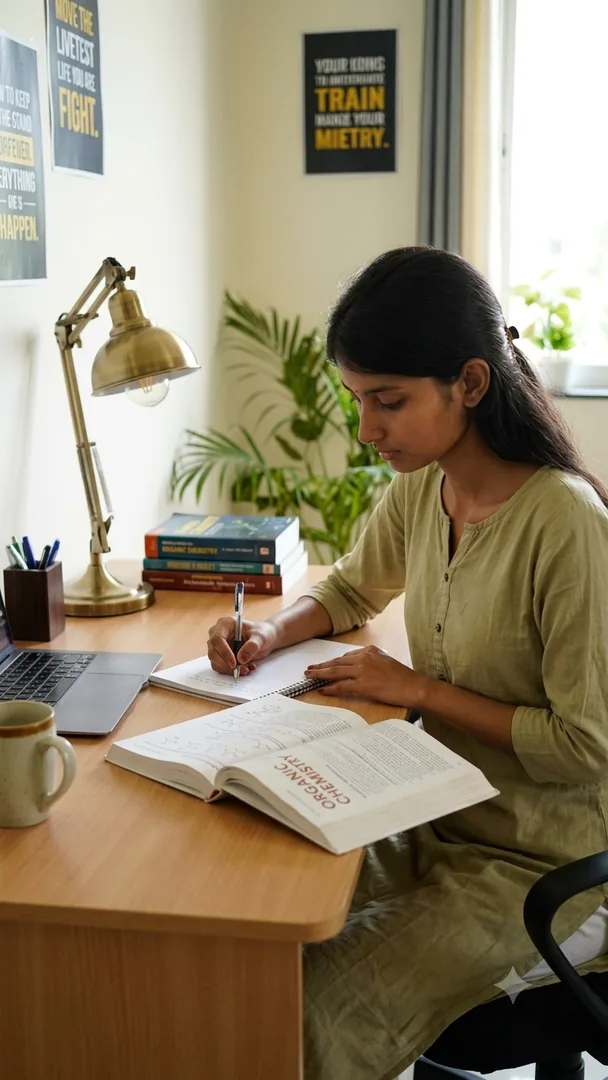
Aesthetic Indian College Student Study Session
realistic and aesthetic photo of a student studying at a desk with books, notes, and a peaceful study environment.” 📚✨
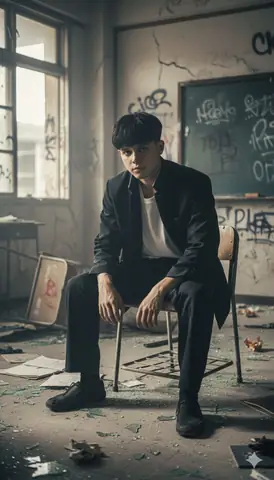
Suzuran Student Rebel Portrait
A tough student in abandoned classroom with graffiti and broken chair surroundings.

Mafia Boss Dark Study Portrait
Powerful mafia boss sits in dimly lit opulent study with lion companion nearby.
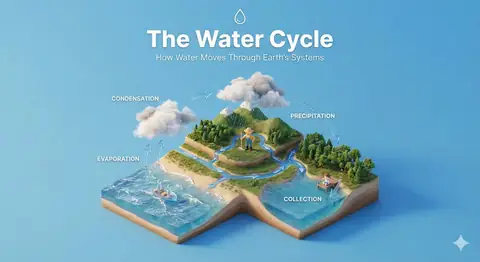
Educational Process Diorama
A clear 45-degree top-down isometric miniature 3D educational diorama explaining a process or concept with stepped layered base, tiny stylized figures, soft refined...
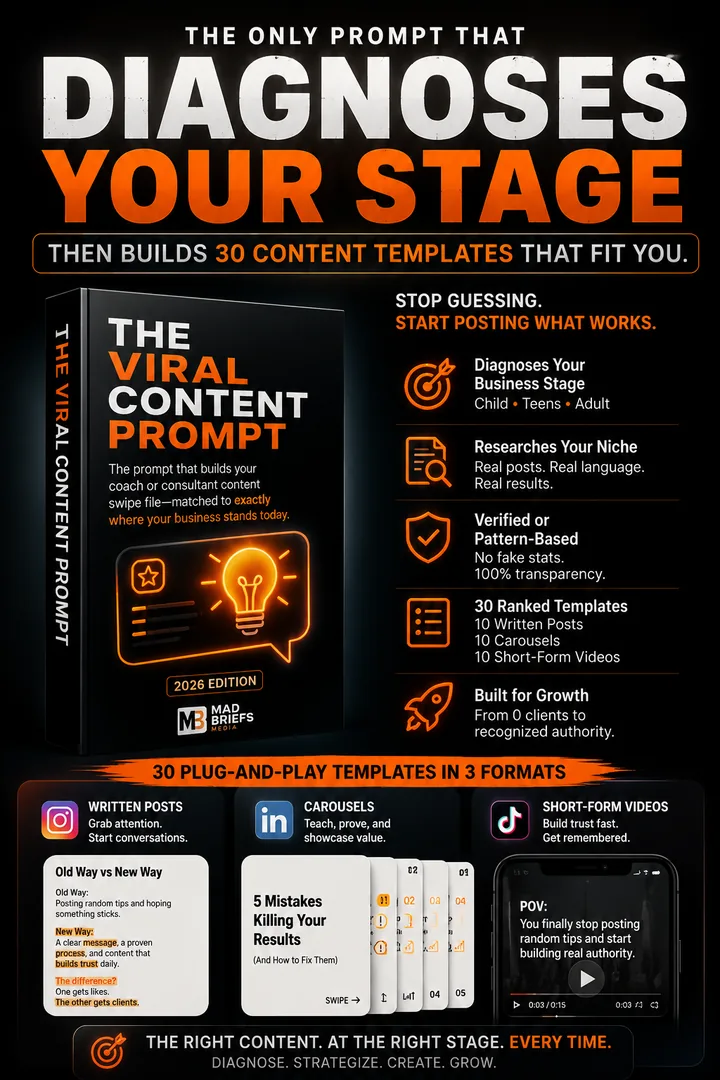
The Viral Content Prompt By Ray
This is the ultimate premium blueprint to get yourself the viral content for personal branding.

Young Man Cafe Portrait
A young man sits in a cafe, gazing at a girl with calm smile.

Glass Skeleton Studying | 3D Render Studying at Desk with Highlighters
Stylized 3D render of clear translucent glass skeleton wearing black-rimmed glasses studying at wooden desk. Highlighting textbook with yellow highlighter. Warm gold...
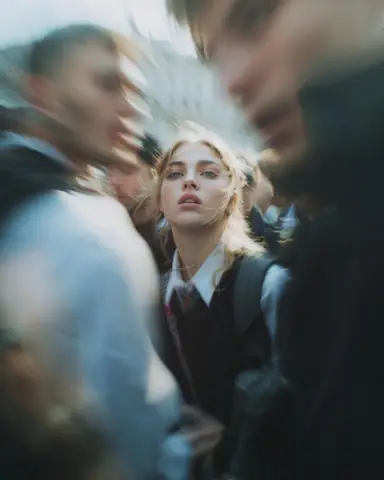
Paparazzi Fashion Flash Photo
A paparazzi-style extreme close-up photo with harsh on-camera flash and grainy high-ISO, capturing a woman with striking features turning toward the camera in a...

Young Couple Coffee Shop Romantic Gemini Prompt
Copy paste this couple coffee shop Gemini AI prompt to create a nostalgic romantic photo. Works instantly — just upload your photo and paste.

Woman Mirror Selfie
Create a mirror selfie of a woman and a man, perfect for social media posts, with a woman in a kurta and a man in a white shirt, great for Instagram p
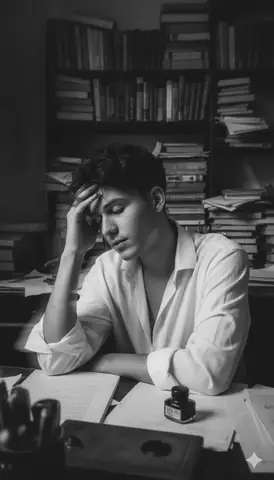
Young Man Intense Thought Portrait
A handsome young man in dimly lit study with intense thought and motion blur surrounding him.
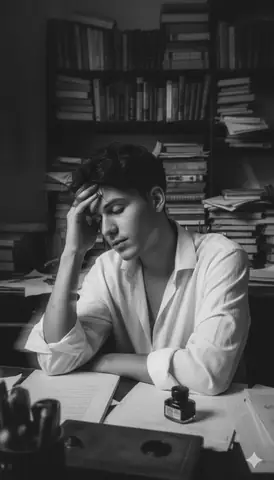
Young Man Intense Thought Portrait
A handsome young man in dimly lit study with intense thought and motion blur surrounding him.
FAQs
- What is the best way to use student prompts for summary?
- Start with the closest prompt example, customize only the details that matter, and test one variation at a time. This keeps the result consistent and easier to improve.
- Is this page for beginners?
- Yes. The page is written for beginners first, with simple copy-paste prompts, related examples and short usage tips.
- Which AI tool should I use?
- Use All AI tools when possible. If the page includes image prompts, Gemini or image generation tools work best. If it includes writing or planning, ChatGPT-style tools work well.
- Why are related prompts shown?
- Related prompts help you find a better match quickly instead of going back and searching again.
Related pages
Student Prompts for Study Plan
Find copy-paste student prompts for study plan prompts with example prompt cards, quick ideas, related categories and simple usage tips.
Student Prompts for Essay
Find copy-paste student prompts for essay prompts with example prompt cards, quick ideas, related categories and simple usage tips.
Student Prompts for Project
Find copy-paste student prompts for project prompts with example prompt cards, quick ideas, related categories and simple usage tips.
Student Prompts for Exam Revision
Find copy-paste student prompts for exam revision prompts with example prompt cards, quick ideas, related categories and simple usage tips.
Best Student AI Prompts 2026
A practical guide to AI prompts for students for school and college students, with examples, prompt formulas, related pages and copy-paste ideas.
How to Use Student AI Prompts
A practical tutorial explaining how school and college students can use AI prompts for students with ChatGPT without wasting time on weak prompt structure.
Top 100 Student AI Prompts
A useful collection page for top AI prompts for students, with copy-paste examples, prompt cards, FAQs and quick ideas.
Student AI Prompts Copy Paste Examples
Copy-paste examples and prompt frameworks for AI prompts for students, built for beginners who want fast results and clear next steps.
Student AI Prompts Beginner Guide
A simple but professional guide for beginners learning AI prompts for students, with structure, mistakes to avoid and related prompt categories.
AI Prompts for Youtube
Find copy-paste AI prompts for youtube prompts with example prompt cards, quick ideas, related categories and simple usage tips.
Core prompt workflow
Choose the closest page, open one prompt, copy the text, replace only the personal details, then test one version before trying another. Image prompts work best with clear subject, lighting, camera, background and aspect ratio details. Text prompts work best with role, audience, tone, examples, limits and final output format.