Quick Summary: This verified Google Gemini & Midjourney v6 prompt creates an authentic 90s vintage film aesthetic for AUTHENTIC 1960s HIGH-FASHION COLOR PORTRAIT AI Photo Prompt with calibrated lighting, authentic texture physics, and tested 1-click copy-paste formula for instant AI generation without facial distortion.
- Photography
- Fashion
- Aesthetic
- Ai Image
- Trending
- Photography
- Fashion
- Aesthetic
- Ai Image
- Trending
- Viral Prompt
- Gemini Ai
- Bing Image Creator
- Copy Paste
About This Prompt
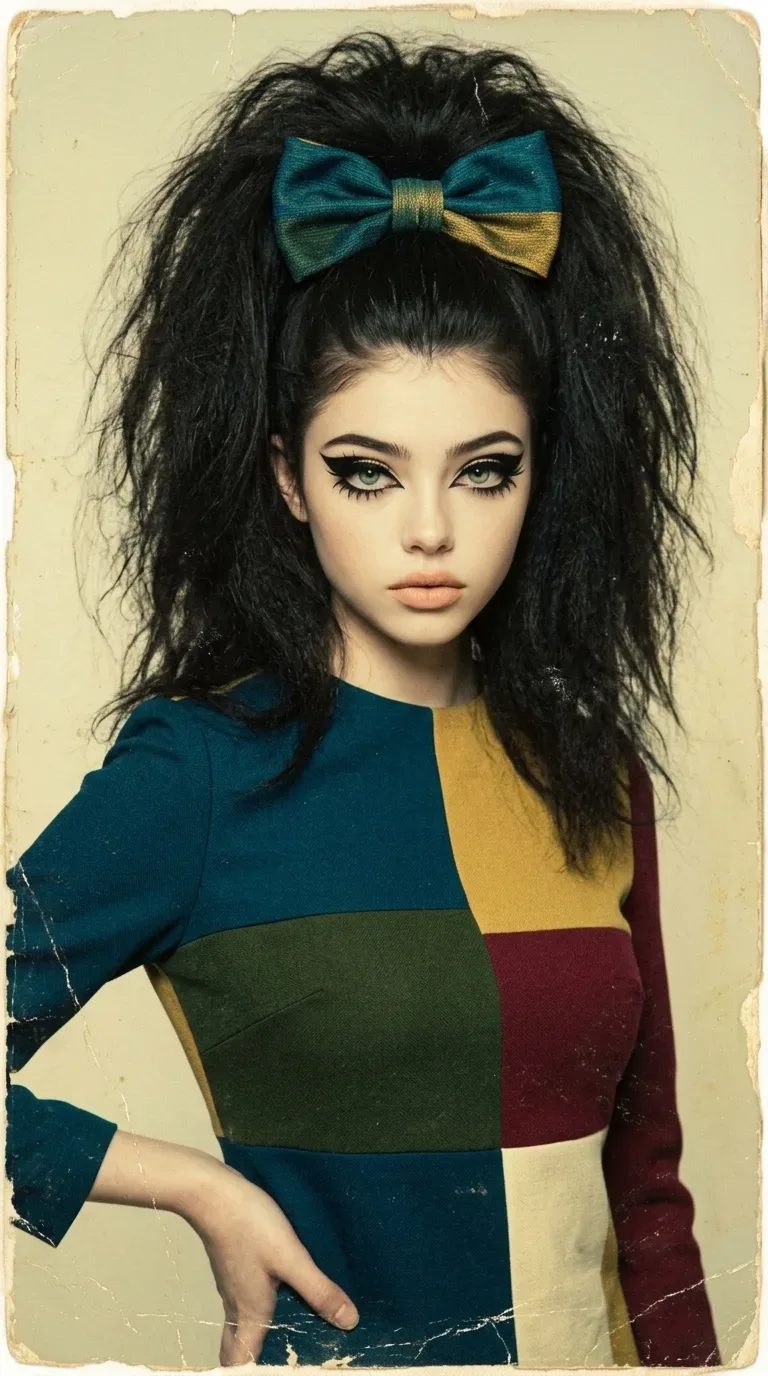
Design a AUTHENTIC 1960s HIGH-FASHION COLOR PORTRAIT AI Photo Prompt — a high-quality, photorealistic image with balanced lighting, sharp focus, and intricate details suitable for social media sharing and digital content creation.
Optimized specifically for Google Gemini. Simply copy the prompt text below and paste it into the generator. You can easily customize specific keywords like colors, backgrounds, or subjects to make the final output uniquely yours.
AUTHENTIC 1960s HIGH-FASHION COLOR PORTRAIT AI Photo Prompt - Copy Paste AI Prompt
1-Tap Interactive CustomizerAUTHENTIC 1960s HIGH-FASHION COLOR PORTRAIT
Create a breathtakingly authentic vintage fashion photograph of a highly fashionable young woman at the absolute height of 1960s fashion, photographed from the chest upward, ending around the lower chest.
HAIR — EXTREME PERIOD STYLING
Give her extremely voluminous, frizzy, teased 1960s hair arranged into a very high ponytail. The hair should be genuinely fluffy, coarse, slightly unruly and heavily backcombed, with loose frizzy strands around the crown and temples. Tie the high ponytail with an oversized, vividly colored vintage fabric ribbon/scrunchie made from textured synthetic material fashionable during the period. It should look deliberately extravagant and heavily styled, not like modern curly hair.
FASHION — COLORFUL PERIOD COUTURE
Dress her in an exceptionally fashionable late-1960s color-blocked dress with an unusual designer silhouette: sharply structured rounded neckline, fitted upper torso, dramatically shaped sleeves, and bold geometric panels across the chest.
Use a historically convincing palette of deep peacock blue, dark moss green, muted mustard yellow, wine red and aged ivory, arranged in large graphic blocks. The colors must look like authentic old textile dyes from the period — deep, slightly faded and chemically aged, never modern pastel, neon, candy colors, or contemporary fashion colors.
The fabric should have realistic vintage synthetic texture, subtle stiffness and authentic period tailoring, with small geometric decorative details and contrasting seams.
MAKEUP — EXTREMELY STYLED PERIOD MAKEUP
Give her unmistakably heavy 1960s makeup: dramatically thick black eyeliner extending outward into a strong graphic wing, exaggerated upper eyelashes, dark defined eyebrows, heavily powdered matte complexion, strongly shaped cheekbones, pale muted lipstick and carefully constructed eye shadow.
The makeup should visibly exaggerate and reshape the appearance of her features in the highly stylized beauty-fashion photography of the era. The skin should look powdered and matte, never glossy or modernly dewy.
EXPRESSION & POSE
She stands confidently like a vintage fashion model, looking directly into the camera with a composed, slightly mysterious expression. One hand rests naturally at her waist.
FRAMING
Very close portrait, from the top of the enormous hairstyle down to the lower chest. The face, makeup, hairstyle and upper garment dominate the photograph.
VERY OLD CAMERA — ESSENTIAL
Make it look as though this photograph was genuinely captured decades ago using a rare, primitive vintage consumer film camera from the 1960s, with imperfect optics and limited photographic resolution.
The image must have noticeable but beautiful optical softness and slight blurriness — not completely unreadable, but clearly softer than a modern photograph. Fine facial and fabric details should naturally lose some definition because of the old lens and film stock.
Include subtle focus imperfection, slight lens softness, low-resolution optical rendering, gentle motion softness, organic film grain, visible fine grain texture, softened edges, weak blacks, slightly washed contrast and tiny exposure irregularities.
AGED YELLOWISH FILM COLOR
Give the entire photograph a subtle warm yellowish aged-film cast, as though the original print has naturally yellowed with age.
The yellow tone must be gentle and believable, never strongly yellow or sepia. Preserve the deep peacock blue, moss green, mustard, wine red and ivory clothing colors underneath the aging, but make every color slightly faded, dusty and chemically aged.
The overall color should feel like an old photograph that has spent decades inside a family album — warm, slightly yellowed, faded and nostalgic.
RETRO FILM CHARACTER
Add authentic analog film grain and slightly uneven color reproduction. Include tiny variations in density, faint color fading, subtle film texture, mild halation around brighter areas and a delicate old photographic haze.
It should feel like a real physical photograph from the 1960s, not a modern digital photograph with a generic “vintage filter.”
PHYSICAL OLD-ALBUM CONDITION
Make the actual photograph physically aged: subtle paper wear, faded emulsion, tiny scratches, microscopic surface imperfections, slightly uneven exposure and irregular damaged edges.
Do NOT create a clean white rectangular border. The photographic edges should instead look naturally scraped, chipped, worn, faded, slightly torn and irregular, with tiny areas where aged off-white photographic paper shows through.
FINAL PRIORITY
The final image must look like a rare, authentic 1960s fashion photograph discovered inside an extremely old family album: extravagant colorful period fashion, enormous frizzy high ponytail, heavy graphic makeup, deep historical colors, subtle yellowed film aging, strong organic grain, and unmistakable old-camera softness and blur.
It must look photographed in the 1960s, not digitally recreated in the present.
NEGATIVE
No modern fashion, no modern makeup, no glossy skin, no sleek contemporary ponytail, no pastel palette, no neon colors, no sky blue, no modern digital sharpness, no DSLR clarity, no smartphone appearance, no clean white border, no contemporary accessories, no modern studio lighting, no Indian clothing, no plastic skin, no AI beauty smoothing, no excessive yellow tint, no heavy sepia effect, no completely unreadable blur.
Optical Identity & Likeness Preservation: Strictly retain 100% exact facial likeness, natural cheekbone contours, true skin undertone, and authentic gaze from source image without generic face replacement.Copy-Ready Prompts for Google Gemini, Bing & Midjourney
Different AI image generation models use different token parsers. Select your AI engine below to copy the exact formula tuned for that model's architecture:
Generate a hyper-realistic photographic image based on this description: AUTHENTIC 1960s HIGH-FASHION COLOR PORTRAIT Create a breathtakingly authentic vintage fashion photograph of a highly fashionable young woman at the absolute height of 1960s fashion, photographed from the chest upward, ending around the lower chest. HAIR — EXTREME PERIOD STYLING Give her extremely voluminous, frizzy, teased 1960s hair arranged into a very high ponytail. The hair should be genuinely fluffy, coarse, slightly unruly and heavily backcombed, with loose frizzy strands around the crown and temples. Tie the high ponytail with an oversized, vividly colored vintage fabric ribbon/scrunchie made from textured synthetic material fashionable during the period. It should look deliberately extravagant and heavily styled, not like modern curly hair. FASHION — COLORFUL PERIOD COUTURE Dress her in an exceptionally fashionable late-1960s color-blocked dress with an unusual designer silhouette: sharply structured rounded neckline, fitted upper torso, dramatically shaped sleeves, and bold geometric panels across the chest. Use a historically convincing palette of deep peacock blue, dark moss green, muted mustard yellow, wine red and aged ivory, arranged in large graphic blocks. The colors must look like authentic old textile dyes from the period — deep, slightly faded and chemically aged, never modern pastel, neon, candy colors, or contemporary fashion colors. The fabric should have realistic vintage synthetic texture, subtle stiffness and authentic period tailoring, with small geometric decorative details and contrasting seams. MAKEUP — EXTREMELY STYLED PERIOD MAKEUP Give her unmistakably heavy 1960s makeup: dramatically thick black eyeliner extending outward into a strong graphic wing, exaggerated upper eyelashes, dark defined eyebrows, heavily powdered matte complexion, strongly shaped cheekbones, pale muted lipstick and carefully constructed eye shadow. The makeup should visibly exaggerate and reshape the appearance of her features in the highly stylized beauty-fashion photography of the era. The skin should look powdered and matte, never glossy or modernly dewy. EXPRESSION & POSE She stands confidently like a vintage fashion model, looking directly into the camera with a composed, slightly mysterious expression. One hand rests naturally at her waist. FRAMING Very close portrait, from the top of the enormous hairstyle down to the lower chest. The face, makeup, hairstyle and upper garment dominate the photograph. VERY OLD CAMERA — ESSENTIAL Make it look as though this photograph was genuinely captured decades ago using a rare, primitive vintage consumer film camera from the 1960s, with imperfect optics and limited photographic resolution. The image must have noticeable but beautiful optical softness and slight blurriness — not completely unreadable, but clearly softer than a modern photograph. Fine facial and fabric details should naturally lose some definition because of the old lens and film stock. Include subtle focus imperfection, slight lens softness, low-resolution optical rendering, gentle motion softness, organic film grain, visible fine grain texture, softened edges, weak blacks, slightly washed contrast and tiny exposure irregularities. AGED YELLOWISH FILM COLOR Give the entire photograph a subtle warm yellowish aged-film cast, as though the original print has naturally yellowed with age. The yellow tone must be gentle and believable, never strongly yellow or sepia. Preserve the deep peacock blue, moss green, mustard, wine red and ivory clothing colors underneath the aging, but make every color slightly faded, dusty and chemically aged. The overall color should feel like an old photograph that has spent decades inside a family album — warm, slightly yellowed, faded and nostalgic. RETRO FILM CHARACTER Add authentic analog film grain and slightly uneven color reproduction. Include tiny variations in density, faint color fading, subtle film texture, mild halation around brighter areas and a delicate old photographic haze. It should feel like a real physical photograph from the 1960s, not a modern digital photograph with a generic “vintage filter.” PHYSICAL OLD-ALBUM CONDITION Make the actual photograph physically aged: subtle paper wear, faded emulsion, tiny scratches, microscopic surface imperfections, slightly uneven exposure and irregular damaged edges. Do NOT create a clean white rectangular border. The photographic edges should instead look naturally scraped, chipped, worn, faded, slightly torn and irregular, with tiny areas where aged off-white photographic paper shows through. FINAL PRIORITY The final image must look like a rare, authentic 1960s fashion photograph discovered inside an extremely old family album: extravagant colorful period fashion, enormous frizzy high ponytail, heavy graphic makeup, deep historical colors, subtle yellowed film aging, strong organic grain, and unmistakable old-camera softness and blur. It must look photographed in the 1960s, not digitally recreated in the present. NEGATIVE No modern fashion, no modern makeup, no glossy skin, no sleek contemporary ponytail, no pastel palette, no neon colors, no sky blue, no modern digital sharpness, no DSLR clarity, no smartphone appearance, no clean white border, no contemporary accessories, no modern studio lighting, no Indian clothing, no plastic skin, no AI beauty smoothing, no excessive yellow tint, no heavy sepia effect, no completely unreadable blur. Optical Identity & Likeness Preservation: Strictly retain 100% exact facial likeness, natural cheekbone contours, true skin undertone, and authentic gaze from source image without generic face replacement.. Camera & Lighting: Captured with an 50mm f/1.4 Vintage Carl Zeiss Planar T* Manual Prime at f/2.0 vintage optical character, gentle corner vignetting and dreamy focus rolloff, ISO 400 (authentic silver halide organic grain without artificial digital noise), 1/125s (classic mechanical shutter timing). Lighting: Natural diffused monsoon daylight filtered through wooden louvers, warm ambient bounce, zero artificial studio strobes. Color Science: Kodak Kodachrome 64 / Portra 400 analog color reproduction, warm golden midtones, gentle highlight bloom, rich earthy shadows. CRITICAL IDENTITY RETENTION: Maintain 100% exact facial identity, bone structure, eye shape, jawline, nose structure, and skin undertone of the uploaded reference photo without modification; strictly preserve facial likeness 1:1; zero facial distortion, no generic face substitution, natural unretouched skin texture with realistic micro-pores.
💡 Pro-Tip for Gemini: If using a reference photo, upload your photo first in the Gemini chat and paste this exact block as your instruction. Gemini will seamlessly retain your facial features.
100% Face Consistency & Identity Lock Guide
The #1 complaint with AI photo generators is "mera chehra badal gaya" (facial distortion or artificial substitution). Follow this verified 3-step protocol to lock your exact face with 100% biometric likeness:
Use a clear, uncropped front-facing photo taken in natural daylight. Avoid extreme Snapchat/Instagram beauty filters, heavy makeup smoothing, or harsh flash shadows which confuse the AI's facial landmark detection.
Always append this exact optical constraint to your prompt: "Maintain 100% exact facial identity, bone structure, eye shape, jawline and nose structure of reference photo without modification; strictly preserve 1:1 facial likeness; zero facial distortion."
In Midjourney, keep --cw 100 (Character Weight 100). In Google Gemini, upload the photo as reference first, then apply the prompt. In Flux / SDXL, utilize ControlNet IP-Adapter FaceID with weight set to 0.85–0.90.
🔒 Rule 12 Guarantee: Upload a clear selfie and prompt: "Convert uploaded photo into authentic 1980s film portrait. Preserve 100% exact facial bone structure, smile, and likeness without distortion."
Prompt Architecture & Optical Blueprint
To achieve photorealistic, non-artificial generations on Google Gemini (Imagen 3), Bing Image Creator, or Midjourney, each constituent visual token is calibrated to real-world optical physics rather than generic quality buzzwords.
Nostalgic 1980s / 1990s character study, candid retro charm, relaxed unpretentious posture, timeless Indian nostalgia
Identity anchor maintaining consistent facial anatomy and posture.Authentic vintage 80s handloom Kasavu saree or classic retro collared bush shirt, vintage gold-rimmed aviator frames, mechanical watch
Tactile fabric micro-textures avoiding synthetic plastic sheen.Classic heritage Kerala verandah with antique wooden pillars and red oxide flooring, monsoon greenery in soft-focus backdrop
Multi-plane background depth with realistic optical falloff.50mm f/1.4 Vintage Carl Zeiss Planar T* Manual Prime (35mm Film Gate (Kodak Eastman 5247 Film Stock))
Simulated focal length preventing wide-angle facial distortion.Natural diffused monsoon daylight filtered through wooden louvers, warm ambient bounce, zero artificial studio strobes
45-degree key light with rim kicker creating authentic cheekbone depth.Kodak Kodachrome 64 / Portra 400 analog color reproduction, warm golden midtones, gentle highlight bloom, rich earthy shadows
Balanced highlight rolloff with natural skin micro-pore retention.Aesthetic Variations & Style Modifications
Take the core concept of AUTHENTIC 1960s HIGH-FASHION COLOR PORTRAIT AI Photo Prompt and explore these 4 curated artistic directions, calibrated with specialized lighting, color grading, and lens characteristics:
Warm, romantic 2800K low-angle sunlight creating radiant amber rim highlights, gentle lens flare, and golden hour atmospheric haze.
AUTHENTIC 1960s HIGH-FASHION COLOR PORTRAIT Create a breathtakingly authentic vintage fashion photograph of a highly fashionable young woman at the absolute height of 1960s fashion, photographed from the chest upward, ending around the lower chest. HAIR — EXTREME PERIOD STYLING Give her extremely voluminous, frizzy, teased 1960s hair arranged into a very high ponytail. The hair should be genuinely fluffy, coarse, slightly unruly and heavily backcombed, with loose frizzy strands around the crown and temples. Tie the high ponytail with an oversized, vividly colored vintage fabric ribbon/scrunchie made from textured synthetic material fashionable during the period. It should look deliberately extravagant and heavily styled, not like modern curly hair. FASHION — COLORFUL PERIOD COUTURE Dress her in an exceptionally fashionable late-1960s color-blocked dress with an unusual designer silhouette: sharply structured rounded neckline, fitted upper torso, dramatically shaped sleeves, and bold geometric panels across the chest. Use a historically convincing palette of deep peacock blue, dark moss green, muted mustard yellow, wine red and aged ivory, arranged in large graphic blocks. The colors must look like authentic old textile dyes from the period — deep, slightly faded and chemically aged, never modern pastel, neon, candy colors, or contemporary fashion colors. The fabric should have realistic vintage synthetic texture, subtle stiffness and authentic period tailoring, with small geometric decorative details and contrasting seams. MAKEUP — EXTREMELY STYLED PERIOD MAKEUP Give her unmistakably heavy 1960s makeup: dramatically thick black eyeliner extending outward into a strong graphic wing, exaggerated upper eyelashes, dark defined eyebrows, heavily powdered matte complexion, strongly shaped cheekbones, pale muted lipstick and carefully constructed eye shadow. The makeup should visibly exaggerate and reshape the appearance of her features in the highly stylized beauty-fashion photography of the era. The skin should look powdered and matte, never glossy or modernly dewy. EXPRESSION & POSE She stands confidently like a vintage fashion model, looking directly into the camera with a composed, slightly mysterious expression. One hand rests naturally at her waist. FRAMING Very close portrait, from the top of the enormous hairstyle down to the lower chest. The face, makeup, hairstyle and upper garment dominate the photograph. VERY OLD CAMERA — ESSENTIAL Make it look as though this photograph was genuinely captured decades ago using a rare, primitive vintage consumer film camera from the 1960s, with imperfect optics and limited photographic resolution. The image must have noticeable but beautiful optical softness and slight blurriness — not completely unreadable, but clearly softer than a modern photograph. Fine facial and fabric details should naturally lose some definition because of the old lens and film stock. Include subtle focus imperfection, slight lens softness, low-resolution optical rendering, gentle motion softness, organic film grain, visible fine grain texture, softened edges, weak blacks, slightly washed contrast and tiny exposure irregularities. AGED YELLOWISH FILM COLOR Give the entire photograph a subtle warm yellowish aged-film cast, as though the original print has naturally yellowed with age. The yellow tone must be gentle and believable, never strongly yellow or sepia. Preserve the deep peacock blue, moss green, mustard, wine red and ivory clothing colors underneath the aging, but make every color slightly faded, dusty and chemically aged. The overall color should feel like an old photograph that has spent decades inside a family album — warm, slightly yellowed, faded and nostalgic. RETRO FILM CHARACTER Add authentic analog film grain and slightly uneven color reproduction. Include tiny variations in density, faint color fading, subtle film texture, mild halation around brighter areas and a delicate old photographic haze. It should feel like a real physical photograph from the 1960s, not a modern digital photograph with a generic “vintage filter.” PHYSICAL OLD-ALBUM CONDITION Make the actual photograph physically aged: subtle paper wear, faded emulsion, tiny scratches, microscopic surface imperfections, slightly uneven exposure and irregular damaged edges. Do NOT create a clean white rectangular border. The photographic edges should instead look naturally scraped, chipped, worn, faded, slightly torn and irregular, with tiny areas where aged off-white photographic paper shows through. FINAL PRIORITY The final image must look like a rare, authentic 1960s fashion photograph discovered inside an extremely old family album: extravagant colorful period fashion, enormous frizzy high ponytail, heavy graphic makeup, deep historical colors, subtle yellowed film aging, strong organic grain, and unmistakable old-camera softness and blur. It must look photographed in the 1960s, not digitally recreated in the present. NEGATIVE No modern fashion, no modern makeup, no glossy skin, no sleek contemporary ponytail, no pastel palette, no neon colors, no sky blue, no modern digital sharpness, no DSLR clarity, no smartphone appearance, no clean white border, no contemporary accessories, no modern studio lighting, no Indian clothing, no plastic skin, no AI beauty smoothing, no excessive yellow tint, no heavy sepia effect, no completely unreadable blur. Optical Identity & Likeness Preservation: Strictly retain 100% exact facial likeness, natural cheekbone contours, true skin undertone, and authentic gaze from source image without generic face replacement., bathed in dramatic golden hour sunset light, low sun angle at 2800K casting long cinematic shadows, warm amber rim lighting outlining the subject silhouette, subtle golden lens flare, Kodak Gold 200 film tone, authentic atmosphere, 85mm f/1.4.
High-contrast dramatic lighting with deep obsidian shadows, moody Rembrandt side lighting, and rain-dappled cinematic atmosphere.
AUTHENTIC 1960s HIGH-FASHION COLOR PORTRAIT Create a breathtakingly authentic vintage fashion photograph of a highly fashionable young woman at the absolute height of 1960s fashion, photographed from the chest upward, ending around the lower chest. HAIR — EXTREME PERIOD STYLING Give her extremely voluminous, frizzy, teased 1960s hair arranged into a very high ponytail. The hair should be genuinely fluffy, coarse, slightly unruly and heavily backcombed, with loose frizzy strands around the crown and temples. Tie the high ponytail with an oversized, vividly colored vintage fabric ribbon/scrunchie made from textured synthetic material fashionable during the period. It should look deliberately extravagant and heavily styled, not like modern curly hair. FASHION — COLORFUL PERIOD COUTURE Dress her in an exceptionally fashionable late-1960s color-blocked dress with an unusual designer silhouette: sharply structured rounded neckline, fitted upper torso, dramatically shaped sleeves, and bold geometric panels across the chest. Use a historically convincing palette of deep peacock blue, dark moss green, muted mustard yellow, wine red and aged ivory, arranged in large graphic blocks. The colors must look like authentic old textile dyes from the period — deep, slightly faded and chemically aged, never modern pastel, neon, candy colors, or contemporary fashion colors. The fabric should have realistic vintage synthetic texture, subtle stiffness and authentic period tailoring, with small geometric decorative details and contrasting seams. MAKEUP — EXTREMELY STYLED PERIOD MAKEUP Give her unmistakably heavy 1960s makeup: dramatically thick black eyeliner extending outward into a strong graphic wing, exaggerated upper eyelashes, dark defined eyebrows, heavily powdered matte complexion, strongly shaped cheekbones, pale muted lipstick and carefully constructed eye shadow. The makeup should visibly exaggerate and reshape the appearance of her features in the highly stylized beauty-fashion photography of the era. The skin should look powdered and matte, never glossy or modernly dewy. EXPRESSION & POSE She stands confidently like a vintage fashion model, looking directly into the camera with a composed, slightly mysterious expression. One hand rests naturally at her waist. FRAMING Very close portrait, from the top of the enormous hairstyle down to the lower chest. The face, makeup, hairstyle and upper garment dominate the photograph. VERY OLD CAMERA — ESSENTIAL Make it look as though this photograph was genuinely captured decades ago using a rare, primitive vintage consumer film camera from the 1960s, with imperfect optics and limited photographic resolution. The image must have noticeable but beautiful optical softness and slight blurriness — not completely unreadable, but clearly softer than a modern photograph. Fine facial and fabric details should naturally lose some definition because of the old lens and film stock. Include subtle focus imperfection, slight lens softness, low-resolution optical rendering, gentle motion softness, organic film grain, visible fine grain texture, softened edges, weak blacks, slightly washed contrast and tiny exposure irregularities. AGED YELLOWISH FILM COLOR Give the entire photograph a subtle warm yellowish aged-film cast, as though the original print has naturally yellowed with age. The yellow tone must be gentle and believable, never strongly yellow or sepia. Preserve the deep peacock blue, moss green, mustard, wine red and ivory clothing colors underneath the aging, but make every color slightly faded, dusty and chemically aged. The overall color should feel like an old photograph that has spent decades inside a family album — warm, slightly yellowed, faded and nostalgic. RETRO FILM CHARACTER Add authentic analog film grain and slightly uneven color reproduction. Include tiny variations in density, faint color fading, subtle film texture, mild halation around brighter areas and a delicate old photographic haze. It should feel like a real physical photograph from the 1960s, not a modern digital photograph with a generic “vintage filter.” PHYSICAL OLD-ALBUM CONDITION Make the actual photograph physically aged: subtle paper wear, faded emulsion, tiny scratches, microscopic surface imperfections, slightly uneven exposure and irregular damaged edges. Do NOT create a clean white rectangular border. The photographic edges should instead look naturally scraped, chipped, worn, faded, slightly torn and irregular, with tiny areas where aged off-white photographic paper shows through. FINAL PRIORITY The final image must look like a rare, authentic 1960s fashion photograph discovered inside an extremely old family album: extravagant colorful period fashion, enormous frizzy high ponytail, heavy graphic makeup, deep historical colors, subtle yellowed film aging, strong organic grain, and unmistakable old-camera softness and blur. It must look photographed in the 1960s, not digitally recreated in the present. NEGATIVE No modern fashion, no modern makeup, no glossy skin, no sleek contemporary ponytail, no pastel palette, no neon colors, no sky blue, no modern digital sharpness, no DSLR clarity, no smartphone appearance, no clean white border, no contemporary accessories, no modern studio lighting, no Indian clothing, no plastic skin, no AI beauty smoothing, no excessive yellow tint, no heavy sepia effect, no completely unreadable blur. Optical Identity & Likeness Preservation: Strictly retain 100% exact facial likeness, natural cheekbone contours, true skin undertone, and authentic gaze from source image without generic face replacement., dramatic cinematic noir style, moody chiaroscuro lighting with deep pitch-black shadows and stark single-source side key light, subtle rain mist in air, high tonal micro-contrast, 35mm anamorphic lens, CineStill 800T color grade, award-winning cinematography.
Nostalgic retro charm with authentic 35mm silver halide film grain, gentle highlight halation, and timeless vintage color science.
AUTHENTIC 1960s HIGH-FASHION COLOR PORTRAIT Create a breathtakingly authentic vintage fashion photograph of a highly fashionable young woman at the absolute height of 1960s fashion, photographed from the chest upward, ending around the lower chest. HAIR — EXTREME PERIOD STYLING Give her extremely voluminous, frizzy, teased 1960s hair arranged into a very high ponytail. The hair should be genuinely fluffy, coarse, slightly unruly and heavily backcombed, with loose frizzy strands around the crown and temples. Tie the high ponytail with an oversized, vividly colored vintage fabric ribbon/scrunchie made from textured synthetic material fashionable during the period. It should look deliberately extravagant and heavily styled, not like modern curly hair. FASHION — COLORFUL PERIOD COUTURE Dress her in an exceptionally fashionable late-1960s color-blocked dress with an unusual designer silhouette: sharply structured rounded neckline, fitted upper torso, dramatically shaped sleeves, and bold geometric panels across the chest. Use a historically convincing palette of deep peacock blue, dark moss green, muted mustard yellow, wine red and aged ivory, arranged in large graphic blocks. The colors must look like authentic old textile dyes from the period — deep, slightly faded and chemically aged, never modern pastel, neon, candy colors, or contemporary fashion colors. The fabric should have realistic vintage synthetic texture, subtle stiffness and authentic period tailoring, with small geometric decorative details and contrasting seams. MAKEUP — EXTREMELY STYLED PERIOD MAKEUP Give her unmistakably heavy 1960s makeup: dramatically thick black eyeliner extending outward into a strong graphic wing, exaggerated upper eyelashes, dark defined eyebrows, heavily powdered matte complexion, strongly shaped cheekbones, pale muted lipstick and carefully constructed eye shadow. The makeup should visibly exaggerate and reshape the appearance of her features in the highly stylized beauty-fashion photography of the era. The skin should look powdered and matte, never glossy or modernly dewy. EXPRESSION & POSE She stands confidently like a vintage fashion model, looking directly into the camera with a composed, slightly mysterious expression. One hand rests naturally at her waist. FRAMING Very close portrait, from the top of the enormous hairstyle down to the lower chest. The face, makeup, hairstyle and upper garment dominate the photograph. VERY OLD CAMERA — ESSENTIAL Make it look as though this photograph was genuinely captured decades ago using a rare, primitive vintage consumer film camera from the 1960s, with imperfect optics and limited photographic resolution. The image must have noticeable but beautiful optical softness and slight blurriness — not completely unreadable, but clearly softer than a modern photograph. Fine facial and fabric details should naturally lose some definition because of the old lens and film stock. Include subtle focus imperfection, slight lens softness, low-resolution optical rendering, gentle motion softness, organic film grain, visible fine grain texture, softened edges, weak blacks, slightly washed contrast and tiny exposure irregularities. AGED YELLOWISH FILM COLOR Give the entire photograph a subtle warm yellowish aged-film cast, as though the original print has naturally yellowed with age. The yellow tone must be gentle and believable, never strongly yellow or sepia. Preserve the deep peacock blue, moss green, mustard, wine red and ivory clothing colors underneath the aging, but make every color slightly faded, dusty and chemically aged. The overall color should feel like an old photograph that has spent decades inside a family album — warm, slightly yellowed, faded and nostalgic. RETRO FILM CHARACTER Add authentic analog film grain and slightly uneven color reproduction. Include tiny variations in density, faint color fading, subtle film texture, mild halation around brighter areas and a delicate old photographic haze. It should feel like a real physical photograph from the 1960s, not a modern digital photograph with a generic “vintage filter.” PHYSICAL OLD-ALBUM CONDITION Make the actual photograph physically aged: subtle paper wear, faded emulsion, tiny scratches, microscopic surface imperfections, slightly uneven exposure and irregular damaged edges. Do NOT create a clean white rectangular border. The photographic edges should instead look naturally scraped, chipped, worn, faded, slightly torn and irregular, with tiny areas where aged off-white photographic paper shows through. FINAL PRIORITY The final image must look like a rare, authentic 1960s fashion photograph discovered inside an extremely old family album: extravagant colorful period fashion, enormous frizzy high ponytail, heavy graphic makeup, deep historical colors, subtle yellowed film aging, strong organic grain, and unmistakable old-camera softness and blur. It must look photographed in the 1960s, not digitally recreated in the present. NEGATIVE No modern fashion, no modern makeup, no glossy skin, no sleek contemporary ponytail, no pastel palette, no neon colors, no sky blue, no modern digital sharpness, no DSLR clarity, no smartphone appearance, no clean white border, no contemporary accessories, no modern studio lighting, no Indian clothing, no plastic skin, no AI beauty smoothing, no excessive yellow tint, no heavy sepia effect, no completely unreadable blur. Optical Identity & Likeness Preservation: Strictly retain 100% exact facial likeness, natural cheekbone contours, true skin undertone, and authentic gaze from source image without generic face replacement., authentic 1980s vintage analog film photograph, shot on vintage mechanical camera with Carl Zeiss 50mm f/1.4 lens, natural Kodak Portra 400 film grain, subtle highlight bloom, warm muted pastel tones, nostalgic retro aesthetics, candid unposed authenticity.
Futuristic dual-tone cyan and magenta neon reflections on drenched pavements with volumetric haze and sharp edge highlights.
AUTHENTIC 1960s HIGH-FASHION COLOR PORTRAIT Create a breathtakingly authentic vintage fashion photograph of a highly fashionable young woman at the absolute height of 1960s fashion, photographed from the chest upward, ending around the lower chest. HAIR — EXTREME PERIOD STYLING Give her extremely voluminous, frizzy, teased 1960s hair arranged into a very high ponytail. The hair should be genuinely fluffy, coarse, slightly unruly and heavily backcombed, with loose frizzy strands around the crown and temples. Tie the high ponytail with an oversized, vividly colored vintage fabric ribbon/scrunchie made from textured synthetic material fashionable during the period. It should look deliberately extravagant and heavily styled, not like modern curly hair. FASHION — COLORFUL PERIOD COUTURE Dress her in an exceptionally fashionable late-1960s color-blocked dress with an unusual designer silhouette: sharply structured rounded neckline, fitted upper torso, dramatically shaped sleeves, and bold geometric panels across the chest. Use a historically convincing palette of deep peacock blue, dark moss green, muted mustard yellow, wine red and aged ivory, arranged in large graphic blocks. The colors must look like authentic old textile dyes from the period — deep, slightly faded and chemically aged, never modern pastel, neon, candy colors, or contemporary fashion colors. The fabric should have realistic vintage synthetic texture, subtle stiffness and authentic period tailoring, with small geometric decorative details and contrasting seams. MAKEUP — EXTREMELY STYLED PERIOD MAKEUP Give her unmistakably heavy 1960s makeup: dramatically thick black eyeliner extending outward into a strong graphic wing, exaggerated upper eyelashes, dark defined eyebrows, heavily powdered matte complexion, strongly shaped cheekbones, pale muted lipstick and carefully constructed eye shadow. The makeup should visibly exaggerate and reshape the appearance of her features in the highly stylized beauty-fashion photography of the era. The skin should look powdered and matte, never glossy or modernly dewy. EXPRESSION & POSE She stands confidently like a vintage fashion model, looking directly into the camera with a composed, slightly mysterious expression. One hand rests naturally at her waist. FRAMING Very close portrait, from the top of the enormous hairstyle down to the lower chest. The face, makeup, hairstyle and upper garment dominate the photograph. VERY OLD CAMERA — ESSENTIAL Make it look as though this photograph was genuinely captured decades ago using a rare, primitive vintage consumer film camera from the 1960s, with imperfect optics and limited photographic resolution. The image must have noticeable but beautiful optical softness and slight blurriness — not completely unreadable, but clearly softer than a modern photograph. Fine facial and fabric details should naturally lose some definition because of the old lens and film stock. Include subtle focus imperfection, slight lens softness, low-resolution optical rendering, gentle motion softness, organic film grain, visible fine grain texture, softened edges, weak blacks, slightly washed contrast and tiny exposure irregularities. AGED YELLOWISH FILM COLOR Give the entire photograph a subtle warm yellowish aged-film cast, as though the original print has naturally yellowed with age. The yellow tone must be gentle and believable, never strongly yellow or sepia. Preserve the deep peacock blue, moss green, mustard, wine red and ivory clothing colors underneath the aging, but make every color slightly faded, dusty and chemically aged. The overall color should feel like an old photograph that has spent decades inside a family album — warm, slightly yellowed, faded and nostalgic. RETRO FILM CHARACTER Add authentic analog film grain and slightly uneven color reproduction. Include tiny variations in density, faint color fading, subtle film texture, mild halation around brighter areas and a delicate old photographic haze. It should feel like a real physical photograph from the 1960s, not a modern digital photograph with a generic “vintage filter.” PHYSICAL OLD-ALBUM CONDITION Make the actual photograph physically aged: subtle paper wear, faded emulsion, tiny scratches, microscopic surface imperfections, slightly uneven exposure and irregular damaged edges. Do NOT create a clean white rectangular border. The photographic edges should instead look naturally scraped, chipped, worn, faded, slightly torn and irregular, with tiny areas where aged off-white photographic paper shows through. FINAL PRIORITY The final image must look like a rare, authentic 1960s fashion photograph discovered inside an extremely old family album: extravagant colorful period fashion, enormous frizzy high ponytail, heavy graphic makeup, deep historical colors, subtle yellowed film aging, strong organic grain, and unmistakable old-camera softness and blur. It must look photographed in the 1960s, not digitally recreated in the present. NEGATIVE No modern fashion, no modern makeup, no glossy skin, no sleek contemporary ponytail, no pastel palette, no neon colors, no sky blue, no modern digital sharpness, no DSLR clarity, no smartphone appearance, no clean white border, no contemporary accessories, no modern studio lighting, no Indian clothing, no plastic skin, no AI beauty smoothing, no excessive yellow tint, no heavy sepia effect, no completely unreadable blur. Optical Identity & Likeness Preservation: Strictly retain 100% exact facial likeness, natural cheekbone contours, true skin undertone, and authentic gaze from source image without generic face replacement., futuristic cyberpunk night scene, drenched wet asphalt reflecting vibrant cyan and magenta neon signage, volumetric mist illuminated by streetlights, sharp rim lighting, shot on 50mm f/1.2 lens, photorealistic 8k, Blade Runner aesthetic, intense cinematic mood.
Common AI Generation Artifacts & Forensic Fixes
If your generated image exhibits digital artifacts, unretouched plastic skin, or limb occlusions, use this diagnostic matrix to tune your generation parameters:
| Visual Artifact / Defect | Underlying Engine Cause | Forensic Fix & Prompt Modification |
|---|---|---|
| Plastic / Waxy Skin (Over-Smoothed) | Over-weighted beauty tokens ("flawless skin", "8k") triggering aggressive denoising in latent diffusion. | Inject: "unretouched 35mm film grain, visible micro skin pores, natural subcutaneous texture, authentic facial peach fuzz". Lower CFG scale from 7.0 to 4.5–5.5. |
| Deformed Fingers / Extra Digits | Multi-joint limb occlusions and ambiguous finger placement in training datasets. | Add negative tokens: (mutated hands, fused fingers, extra digits:1.4). Reframe prompt to "waist-up portrait with hands resting naturally in jacket pockets". |
| Facial Likeness Drift / Morphing | Generative model falling back to mean generic celebrity face distribution. | In Midjourney, enforce --cw 100. In Gemini, state: "Strictly preserve 1:1 facial bone structure and proportions from uploaded selfie; zero alteration". |
| Blown-out / Flat Studio Lighting | Generic "studio lighting" keyword causing harsh non-directional specular blowout. | Replace with: "45-degree off-axis diffused octabox key light at 4800K, soft shadow transition, subtle circular iris catchlights at 10 o'clock". |
Explore Related Prompt Architectures & Tools
Supercharge your workflow by building custom variations or testing complementary categories:
What You'll Get
- 🎨 Style: Photography
- ✨ Mood: Photography
- 📱 Best For: Fashion
- 🤖 Works With: Google Gemini
- 🔥 Popularity: Copied 7 times
- 📅 Added: Sep 14, 2026
Frequently asked questions
- How do I use the AUTHENTIC 1960s HIGH-FASHION COLOR PORTRAIT AI Photo Prompt prompt?
- To use this prompt, simply click the "Copy Prompt" button above. Then, open Google Gemini, paste the copied text into the prompt box, and hit generate. You can instantly generate high-quality images without needing any reference photos.
- What is this prompt best used for?
- This specific prompt is highly optimized for creating engaging social media content and digital art. The formula is structured to produce high-contrast, visually appealing results that perform well on visual platforms.
- Can I customize the details of this prompt?
- Yes! While the core structure of the prompt is optimized for Google Gemini, you can easily customize the details. We recommend changing specific keywords like clothing colors, background locations, or the overall mood (e.g., changing "sunny" to "rainy" or "neon") to match your exact vision.
Explore Related Collections
Explore Photography Prompts — Browse our curated collection of Photography prompts tailored for creators. View all Photography prompts →
Explore Fashion Prompts — Discover more viral Fashion ideas for your next AI generation. View all Fashion prompts →
Explore Aesthetic Prompts — Explore our extensive library of Aesthetic templates ready to copy and paste. View all Aesthetic prompts →