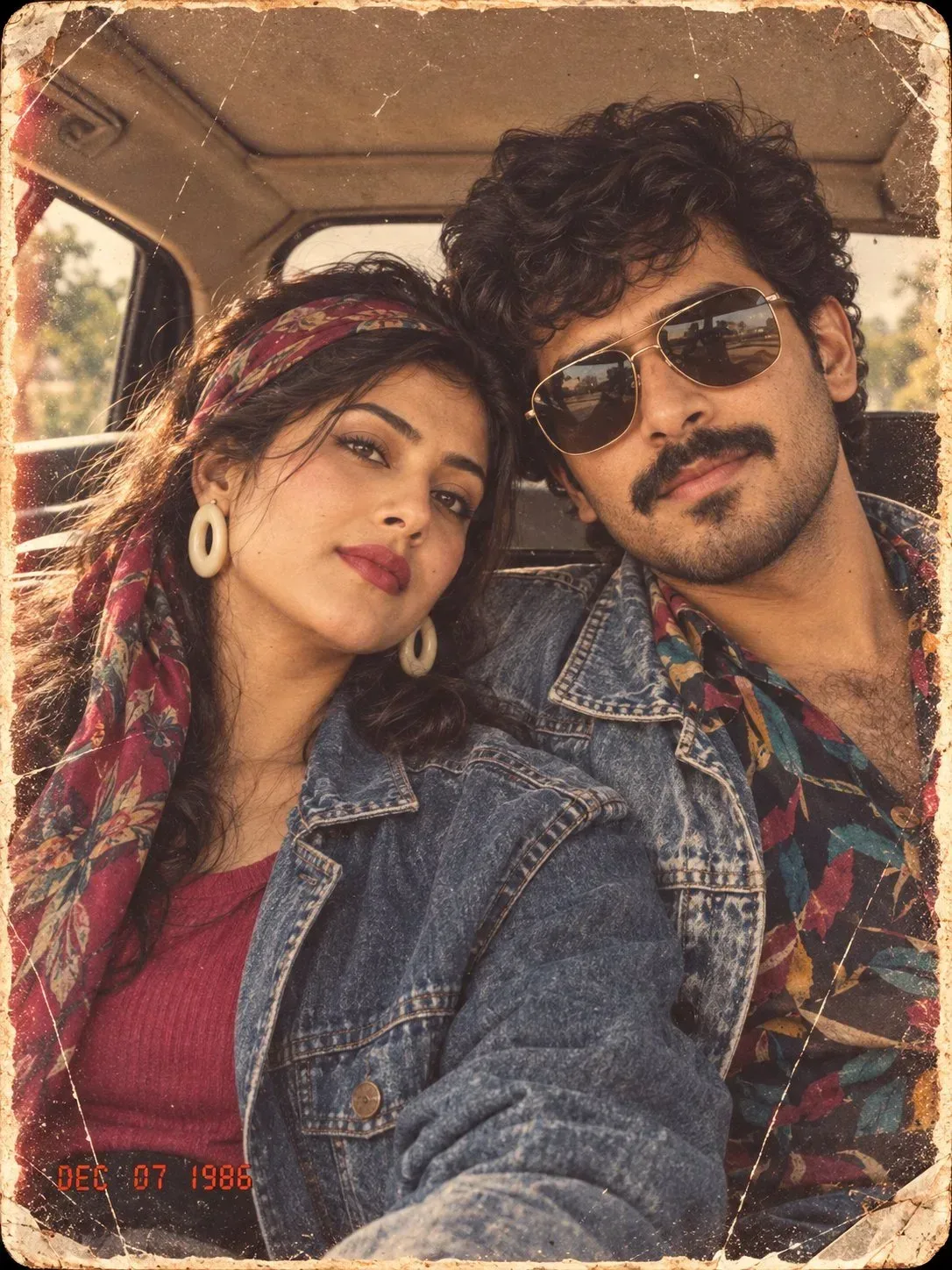
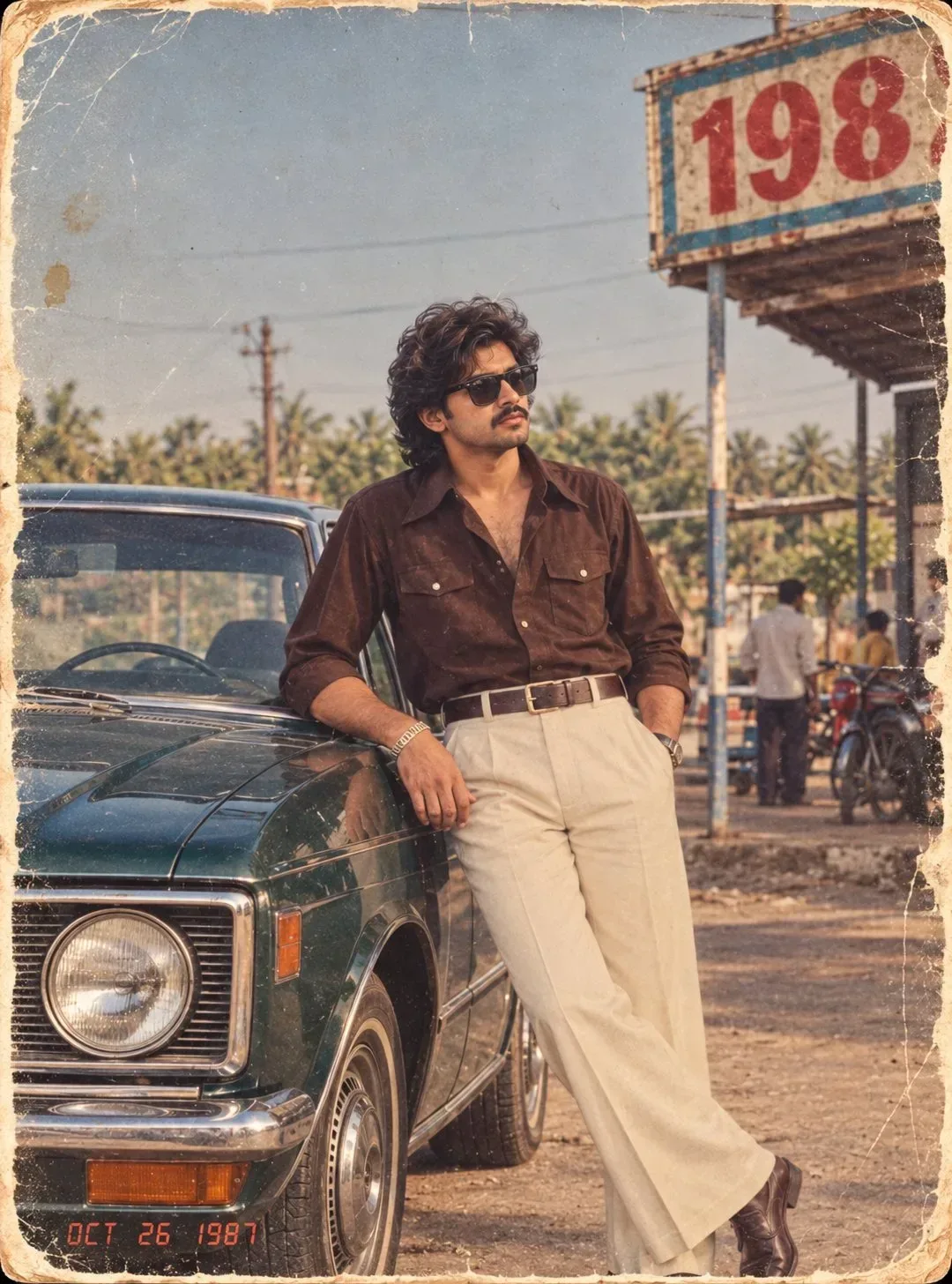
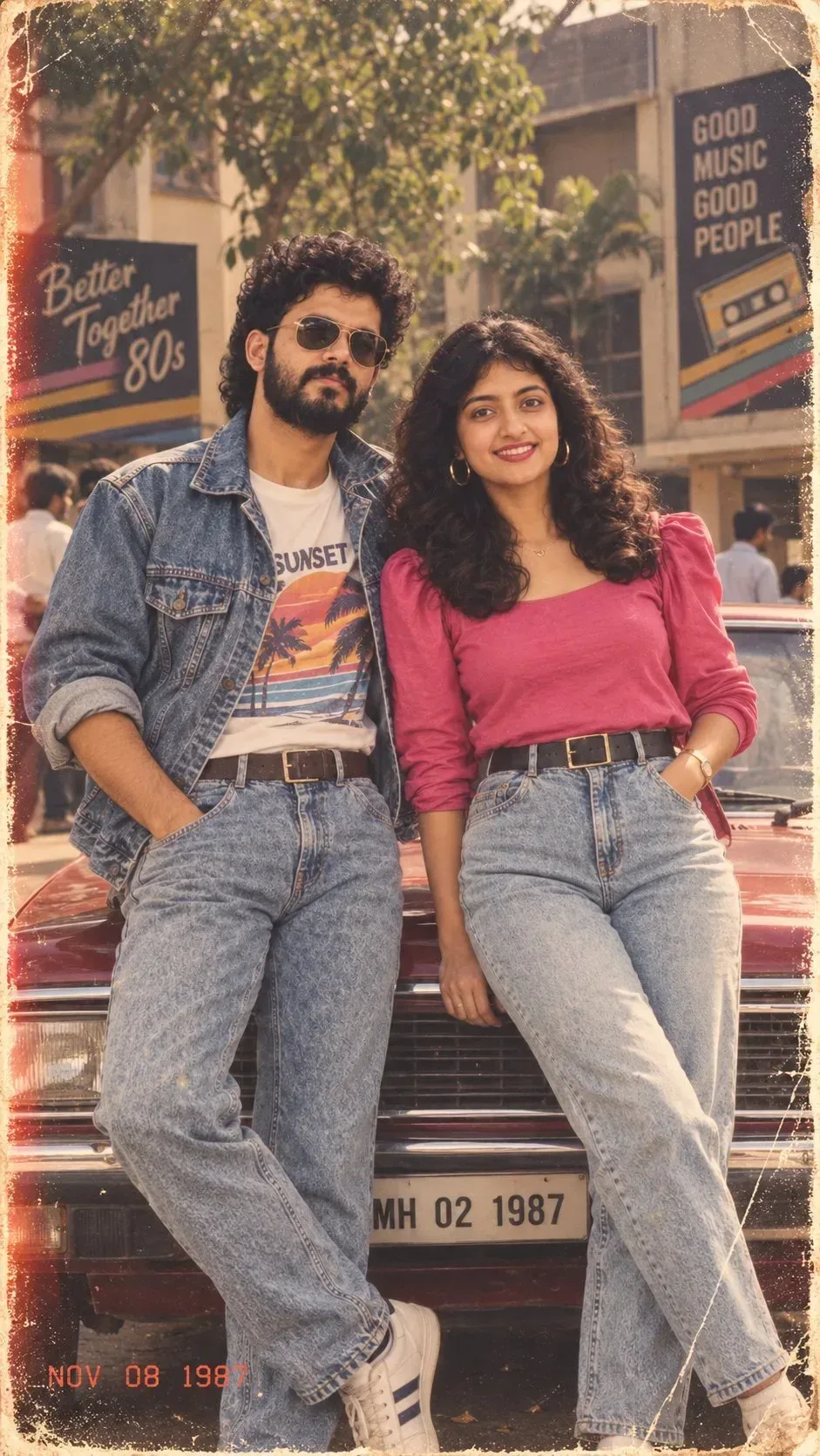
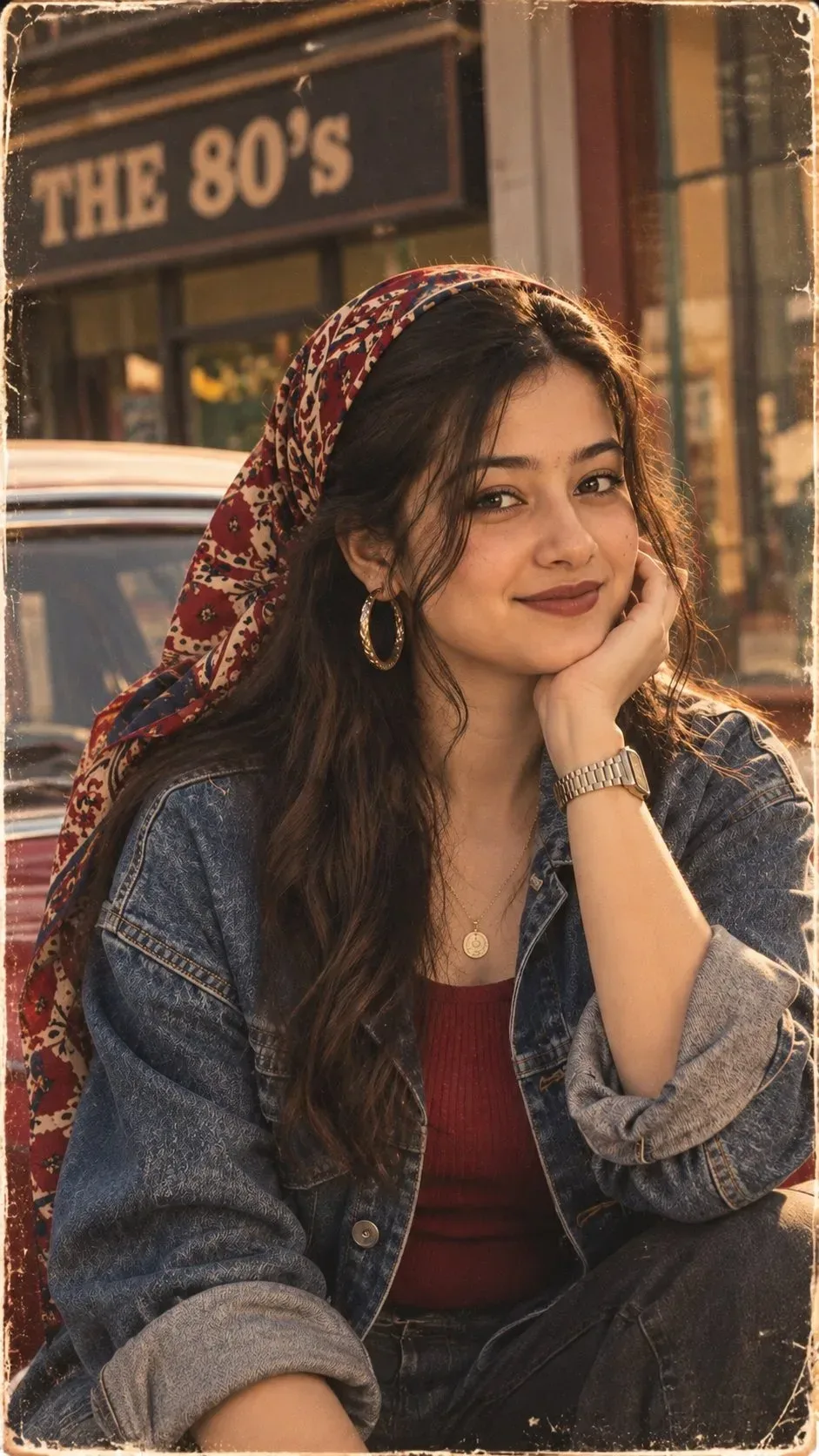
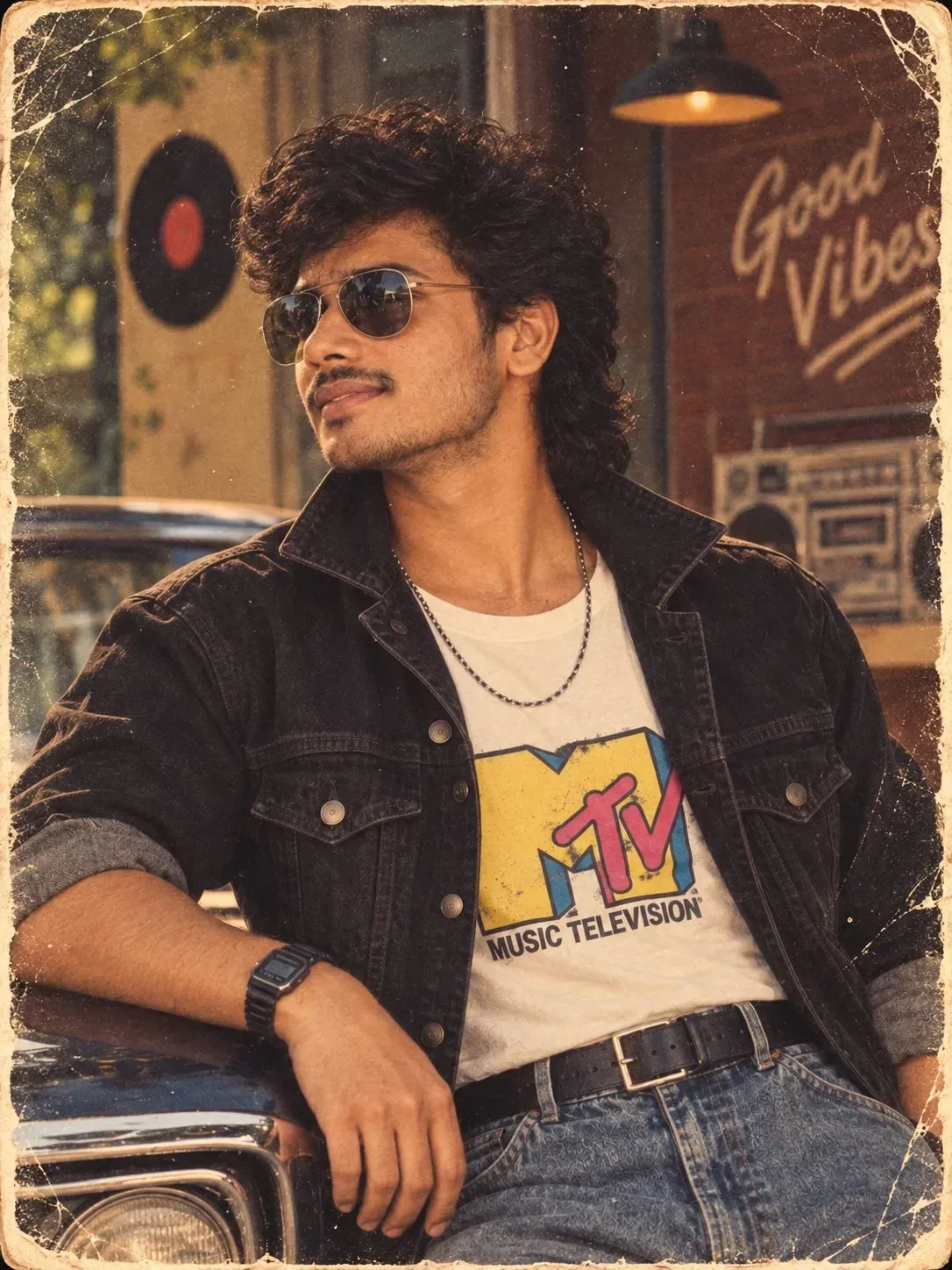
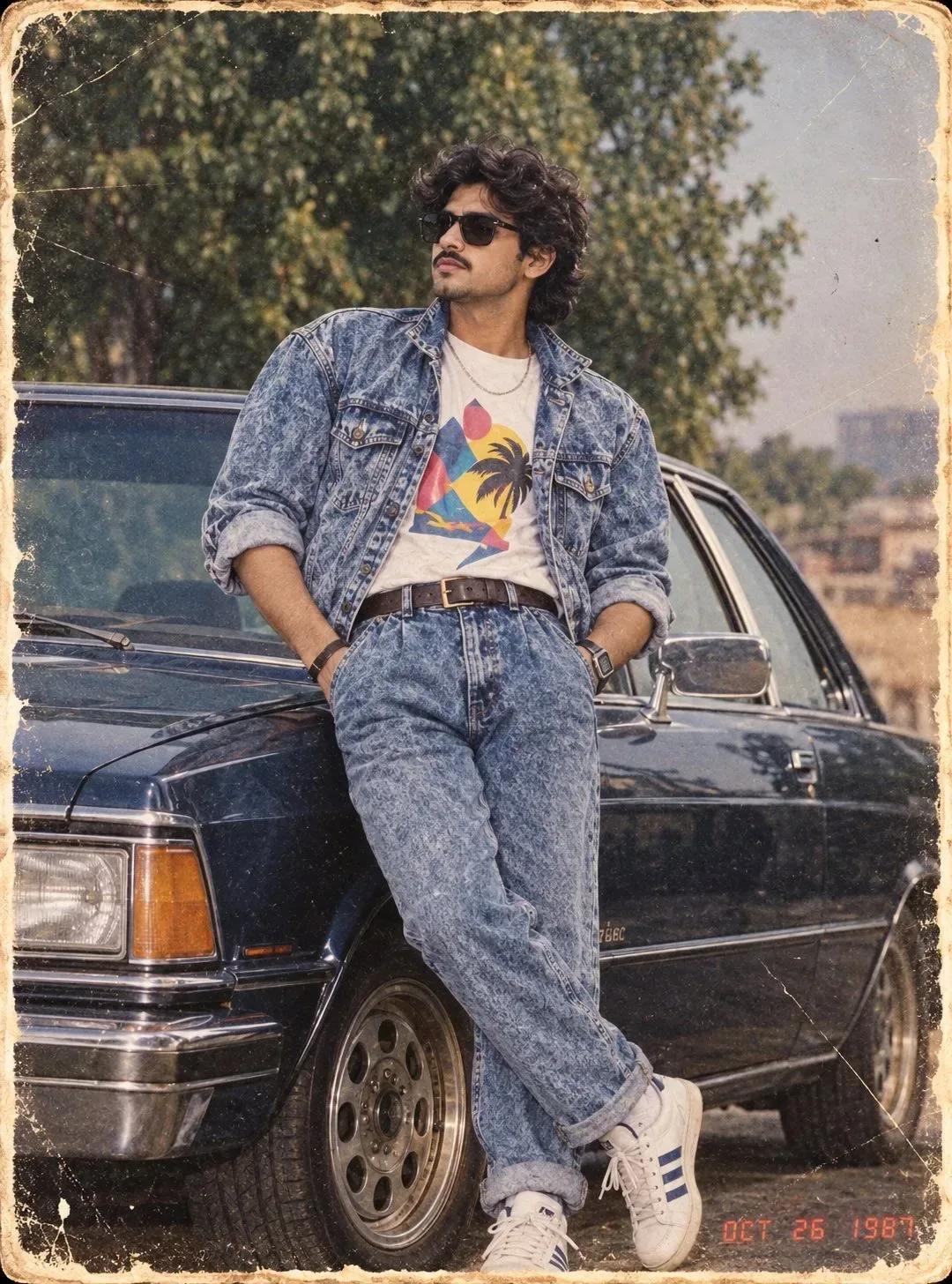
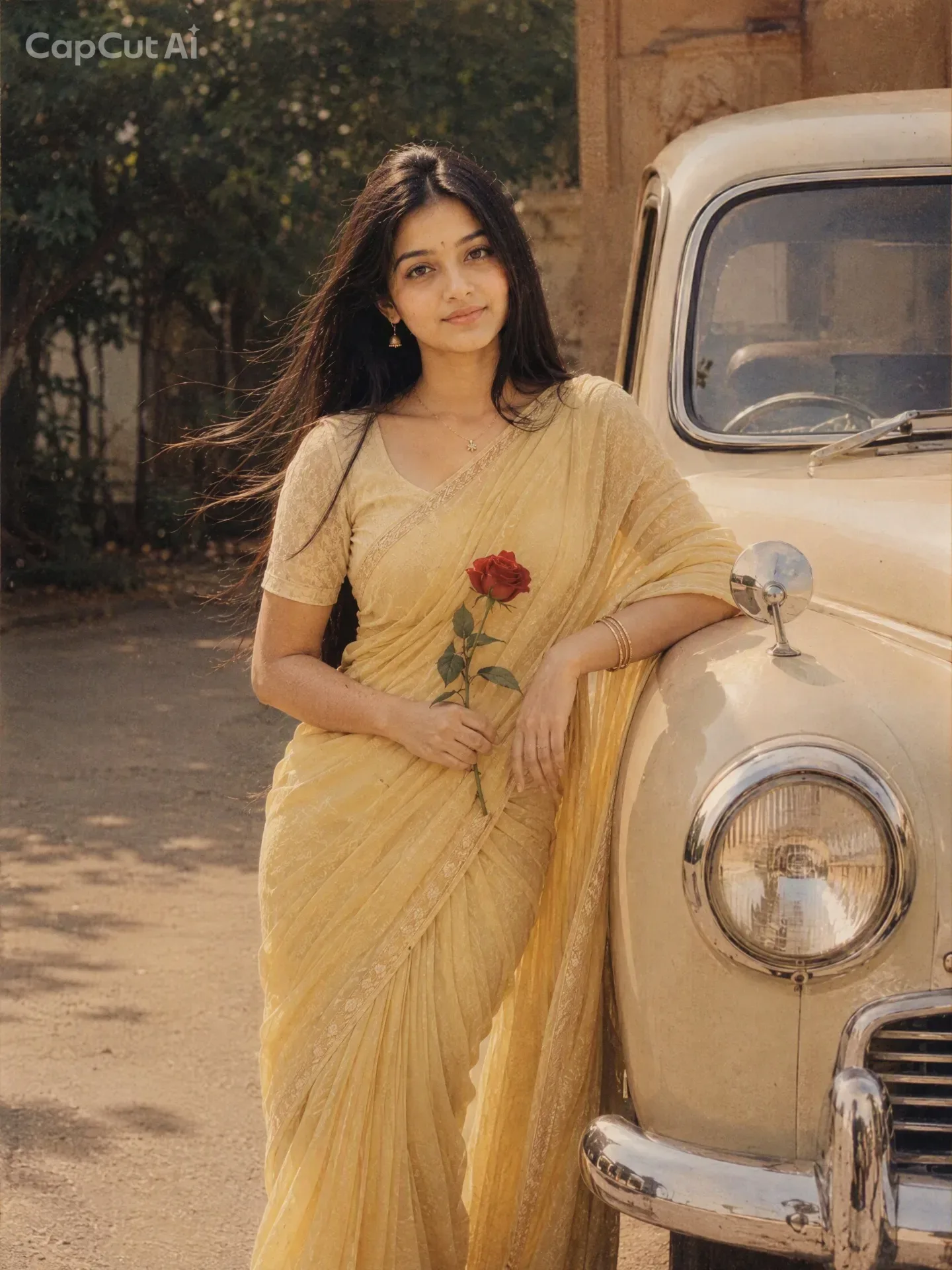
Quick Summary: This verified Google Gemini & Midjourney v6 prompt creates an authentic 90s vintage film aesthetic for Vintage 1990s Indian Car Portrait AI Photo Prompt with calibrated lighting, authentic texture physics, and tested 1-click copy-paste formula for instant AI generation without facial distortion.
- Ai Image
- Automotive
- Cinematic
- Photography
- Retro
- Trending
- Vintage
- Photography
- Vintage
- Retro
- Automotive
- Cinematic
- Ai Image
- Trending
- Viral Prompt
- Gemini Ai
- Bing Image Creator
- Copy Paste
About This Prompt
Use this prompt to generate a Vintage 1990s Indian Car Portrait AI Photo Prompt — a high-quality, photorealistic image with balanced lighting, sharp focus, and intricate details suitable for social media sharing and digital content creation.
Optimized specifically for Google Gemini. Simply copy the prompt text below and paste it into the generator. You can easily customize specific keywords like colors, backgrounds, or subjects to make the final output uniquely yours.
Vintage 1990s Indian Car Portrait AI Photo Prompt - Copy Paste AI Prompt
Create an ultra-realistic vintage Indian 1990s-style photograph using the uploaded photo as the identity reference.

IDENTITY — HIGHEST PRIORITY:
Use the uploaded person's face as the exact identity. Preserve their recognizable facial structure, face shape, eyes, eyebrows, nose, lips, jawline, cheeks, natural skin tone, age, and distinctive facial characteristics. Do not turn them into a different person. Keep the person's natural proportions and realistic skin texture.

HAIR:
Keep the person's hair length proportional to their uploaded appearance. Do NOT automatically give every subject extremely long hair.
If the uploaded subject has medium-length hair, keep it medium-length. If long, keep it long. If shorter, keep it shorter.
Preserve the natural density appropriate to the subject, but give the hair a soft, full, slightly voluminous vintage appearance.

Create a controlled artificial breeze from BOTH sides of the subject. The hair should move naturally outward and slightly backward on both sides, as if a gentle electric fan is positioned in front of the subject. Only some outer strands should lift and flow; the entire hairstyle must not fly dramatically. The movement should look elegant, realistic, and photographic.

SUBJECT POSITION & POSE:
Create a vertical 3:4 full-body/three-quarter portrait.

The subject is standing beside the FRONT RIGHT SIDE of a very old cream-colored vintage automobile.

The subject stands upright but with a subtle relaxed lean toward the car.

RIGHT ARM:
The subject's right arm is bent naturally at the elbow, with the right hand resting near the waist/hip. The hand should gently hold a single realistic fresh red rose by its stem, positioned naturally against the waist area.

LEFT ARM:
The subject's left arm is bent at approximately a 90-degree angle. The left elbow rests naturally on the upper edge/fender area of the vintage car. The forearm extends inward/downward from the elbow, with the left hand relaxed naturally near the side of the body. The elbow is visibly making contact with the car.

Do not swap the arms. Do not change the elbow placement. Do not make both hands hold the rose.

BODY ORIENTATION:
The subject's body is angled slightly toward the car while the shoulders remain mostly visible to the camera. The head is turned gently toward the camera with a subtle, relaxed 1990s-style smile. The expression should be soft and natural, not a wide modern smile.

SAREE:
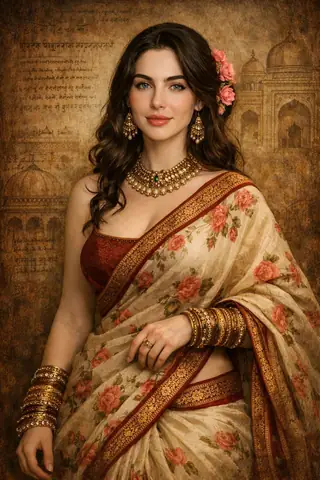
Dress the subject in a lightweight pale yellow traditional Indian saree, approximately #E5C66E to #F0D98A.

The saree should have a delicate woven texture and a subtle traditional pattern. Use a graceful, perfectly arranged vintage drape with realistic pleats.

The pallu should fall naturally from the shoulder and extend downward beside the body, following gravity. The saree must fit naturally around the subject's actual body proportions. Do not make the clothing look digitally pasted onto the body.

Use a matching pale-yellow short-sleeved blouse with subtle traditional detailing.

The saree should look elegant, lightweight, slightly translucent in the highlights, and authentic to a nostalgic Indian photograph.

JEWELRY:
Add understated traditional Indian gold jewelry:
small-to-medium gold jhumka earrings, a very delicate gold necklace, and a few thin gold bangles.

Keep the jewelry realistic and proportional. Do not overload the subject with modern or extremely heavy jewelry.

CAR — EXACT VISUAL STRUCTURE:
Use an extremely old cream/ivory Indian vintage automobile with a rounded 1940s–1950s-style body, large circular chrome headlamp, tall rounded front fender, curved hood, prominent chrome bumper, vertical chrome grille, small round chrome side mirror, and rounded windshield.

The car must be the SAME visual type and proportions throughout the image.

Show approximately the FRONT RIGHT QUARTER of the car only.

The car occupies approximately the RIGHT 35–40% of the image.

Visible car elements:
• front-right rounded fender
• one large circular headlight
• curved cream hood
• small round chrome side mirror
• part of the windshield
• vertical front grille
• chrome bumper
• a small portion of the front side panel

Do NOT show the entire car.
Do NOT show the rear.
Do NOT turn it into a modern sedan.
Do NOT use a modern Ambassador-style vehicle.
It should look like an exceptionally old, rounded Indian automobile with genuine period chrome details.

CAR COLOR:
Warm aged ivory/cream approximately #D8C39A, with slightly darker aged areas around the edges.

BACKGROUND:
Keep the same nostalgic outdoor environment.

Place the subject and car on a quiet old residential street/driveway with muted earthy surroundings.

Background should contain softly blurred mature green trees and foliage on the LEFT side, a warm brown/terracotta architectural wall or building behind the car, and subtle old residential details.

The background must remain strongly out of focus so the subject and car are the visual focus.

Do not add modern buildings, modern vehicles, street signs, advertisements, traffic, smartphones, or contemporary objects.

LIGHTING:
Warm late-afternoon natural sunlight with a soft golden tone.

Light should come from the front-left/upper-left direction, gently illuminating the subject's face, saree, and flowing hair while creating soft natural shadows.

Add subtle warm reflections on the cream car and chrome parts.

No modern studio lighting. No HDR. No artificial neon lighting.

CAMERA:
Authentic analog 35mm film photograph.

Vertical 3:4 composition.
Eye-level camera.
Natural portrait perspective.
Moderate shallow depth of field.
Subject sharply focused.
Background softly blurred.
Slightly imperfect vintage lens rendering.

RETRO FILM TREATMENT:
Create the appearance of a genuine old printed photograph rather than applying a generic digital vintage filter.

Use:
• warm faded highlights
• slightly muted colors
• soft contrast
• lifted dark tones
• subtle yellow-brown film cast
• fine-to-medium analog film grain
• tiny dust particles
• extremely subtle film scratches
• mild photographic softness
• slightly faded black levels
• realistic skin texture
• gentle halation around bright highlights
• slight natural exposure variation

Overall palette:
Pale yellow #E5C66E
Warm cream #D8C39A
Muted brown #76533D
Earthy green #536044
Warm golden beige #B99561
Soft black #24201B

FINAL COMPOSITION:
The final image should reproduce this exact visual arrangement:

SUBJECT = approximately center-left
CAR = approximately right 35–40%
HAIR = naturally flowing outward from both sides
RIGHT HAND = resting at waist while holding one red rose
LEFT ELBOW = resting on the car
LEFT FOREARM/HAND = relaxed downward beside the body
PALE YELLOW SAREE = naturally and perfectly draped
OLD CREAM VINTAGE CAR = front-right quarter only
BACKGROUND = blurred old residential outdoor setting
LIGHT = warm natural late-afternoon light
STYLE = authentic nostalgic 1990s Indian photograph
FORMAT = vertical 3:4

The result must look like a real photograph captured decades ago on analog film, with realistic anatomy, realistic hands, realistic hair movement, realistic fabric, realistic car reflections, and natural interaction between the subject and automobile.

MOST IMPORTANT:
The uploaded person's identity must remain recognizable. Their natural hair length determines the final hair length. The pose, hand positions, elbow placement, car position, amount of visible car, saree arrangement, background structure, lighting direction, hair movement, and camera composition should remain consistent from one generated subject to another.

Optical Identity & Likeness Preservation: Strictly retain 100% exact facial likeness, natural cheekbone contours, true skin undertone, and authentic gaze from source image without generic face replacement.What You'll Get
- 🎨 Style: Ai Image
- ✨ Mood: Photography
- 📱 Best For: Automotive
- 🤖 Works With: Google Gemini
- 🔥 Popularity: Copied 195 times
- 📅 Added: Sep 14, 2026
Explore Related Collections
Explore Ai Image Prompts — Browse our curated collection of Ai Image prompts tailored for creators. View all Ai Image prompts →
Explore Automotive Prompts — Discover more viral Automotive ideas for your next AI generation. View all Automotive prompts →
Explore Cinematic Prompts — Explore our extensive library of Cinematic templates ready to copy and paste. View all Cinematic prompts →
Frequently asked questions
- How do I use the Vintage 1990s Indian Car Portrait AI Photo Prompt prompt?
- To use this prompt, simply click the "Copy Prompt" button above. Then, open Google Gemini, paste the copied text into the prompt box, and hit generate. You can instantly generate high-quality images without needing any reference photos.
- What is this prompt best used for?
- This specific prompt is highly optimized for creating engaging social media content and digital art. The formula is structured to produce high-contrast, visually appealing results that perform well on visual platforms.
- Can I customize the details of this prompt?
- Yes! While the core structure of the prompt is optimized for Google Gemini, you can easily customize the details. We recommend changing specific keywords like clothing colors, background locations, or the overall mood (e.g., changing "sunny" to "rainy" or "neon") to match your exact vision.